Across the central pavilions of the 61st Venice Biennale, one of the most cohesive thematic threads running through contemporary figuration was the ubiquity of the hybrid body: torsos terminating in serpentine fins, portraits brandishing the talons of raptors, and limbs inextricably woven into subterranean roots. Far from an idiosyncratic gesture confined to a single geography or generation, this morphing morphology resurfaced persistently across the Arsenale.
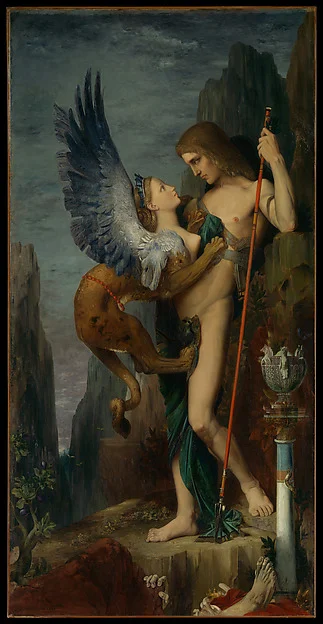
The hybrid figure carries a rich art historical genealogy. From archaic Sphinxes and medieval bestiaries to Gustave Moreau's Symbolist canvases and Surrealist hybridity, human imagination has long interrogated its limits alongside beasts and chimeras. Yet in Venice in 2026, hybridity operates not as a monstrous aberration or Gothic nightmare, but as an urgent realignment of human kinship with non-human species.
Maria Magdalena Campos-Pons's depiction of Koyo Kouoh and Toni Morrison bearing avian talons offers an illustrative case: the claw functions here not as predatory violence, but as an instrument of tenacious grounding and protective ancestry. Elsewhere, aquatic siren-like forms in national pavilions speak directly to the drowning horizons of climate crisis. The human organism is reimagined as plastic, mutating to survive within altered planetary ecologies.
The theoretical armature underpinning this shift converses closely with Posthumanist discourse and Anthropocene critique. From Donna Haraway’s formulations of companion species and "chthulucene" kinship to Eduardo Viveiros de Castro’s Amerindian perspectivism, the Cartesian conceit of human exceptionalism has steadily eroded. While the painters in Venice rarely illustrate philosophical treatises literally, their imagery emerges from the same cognitive atmosphere.
For figurative painting, the chimera unlocks formal horizons beyond academic mimesis. Where classical portraiture operated as a social ledger affirming status and singular psychology, the hybrid figure embeds the subject within an interspecies continuum. In doing so, it demonstrates that contemporary figurative painting remains an indispensable vehicle for examining our deepest ecological and existential vulnerabilities.