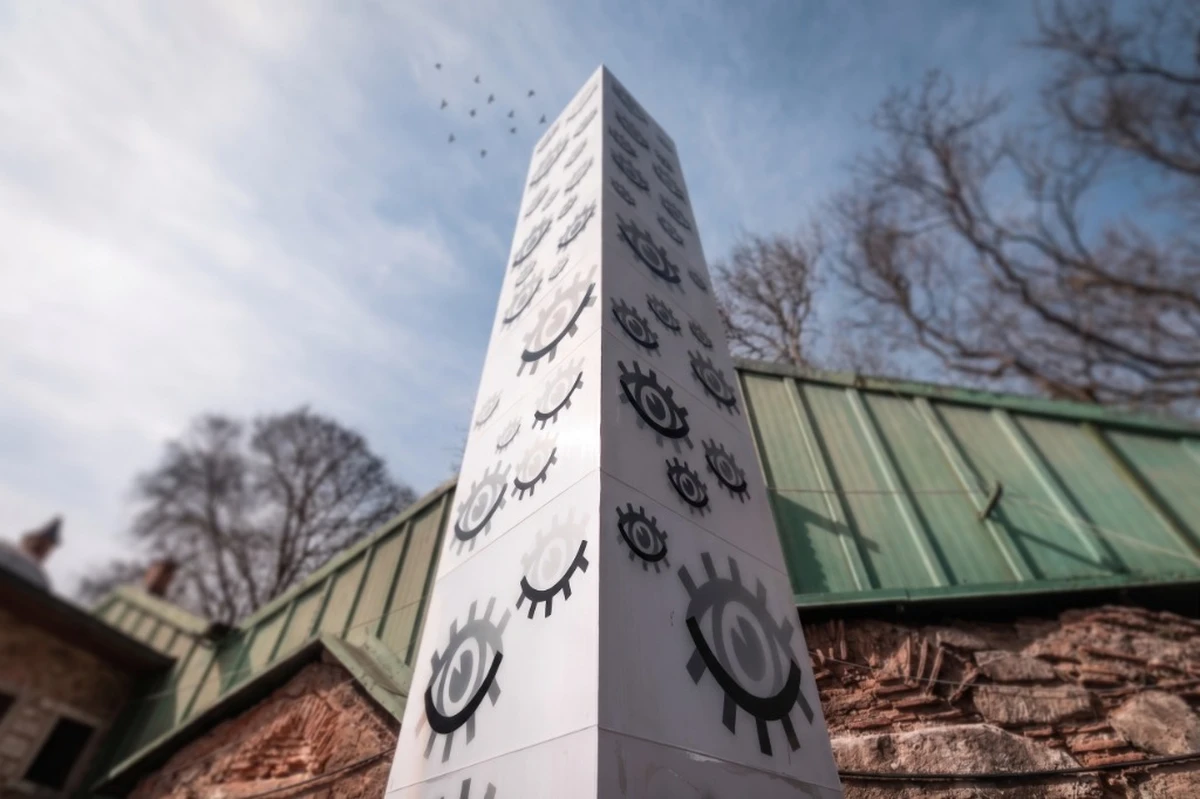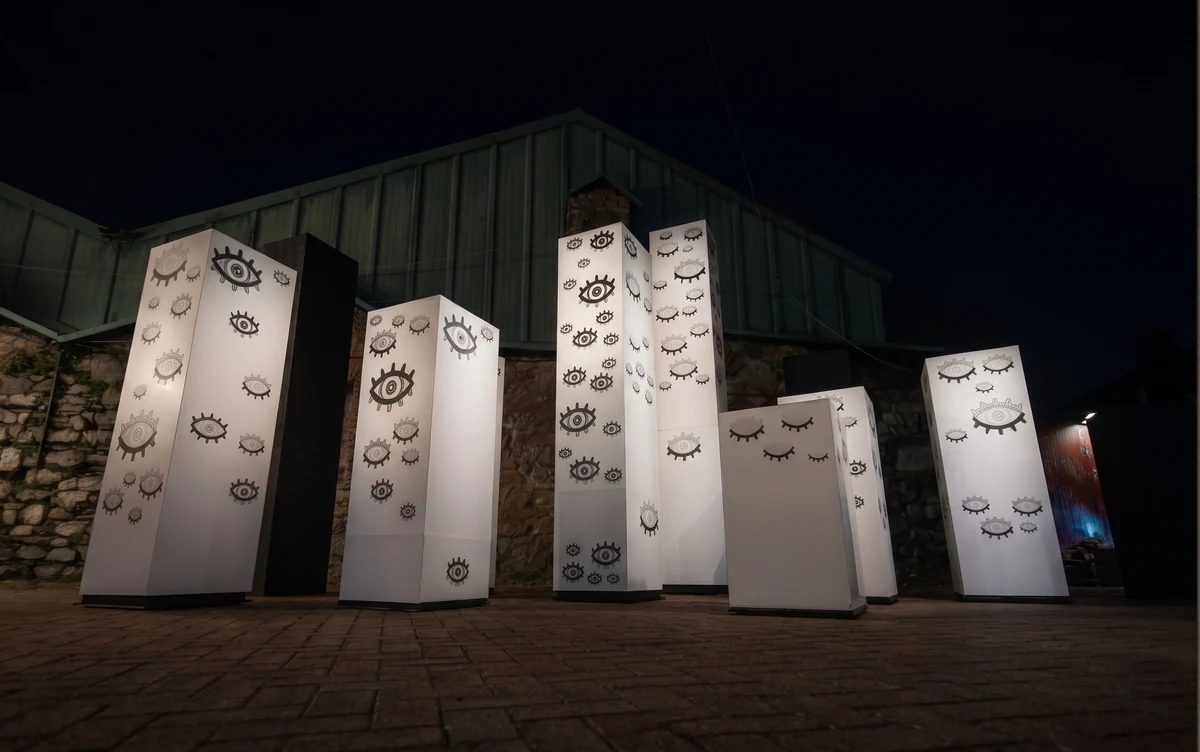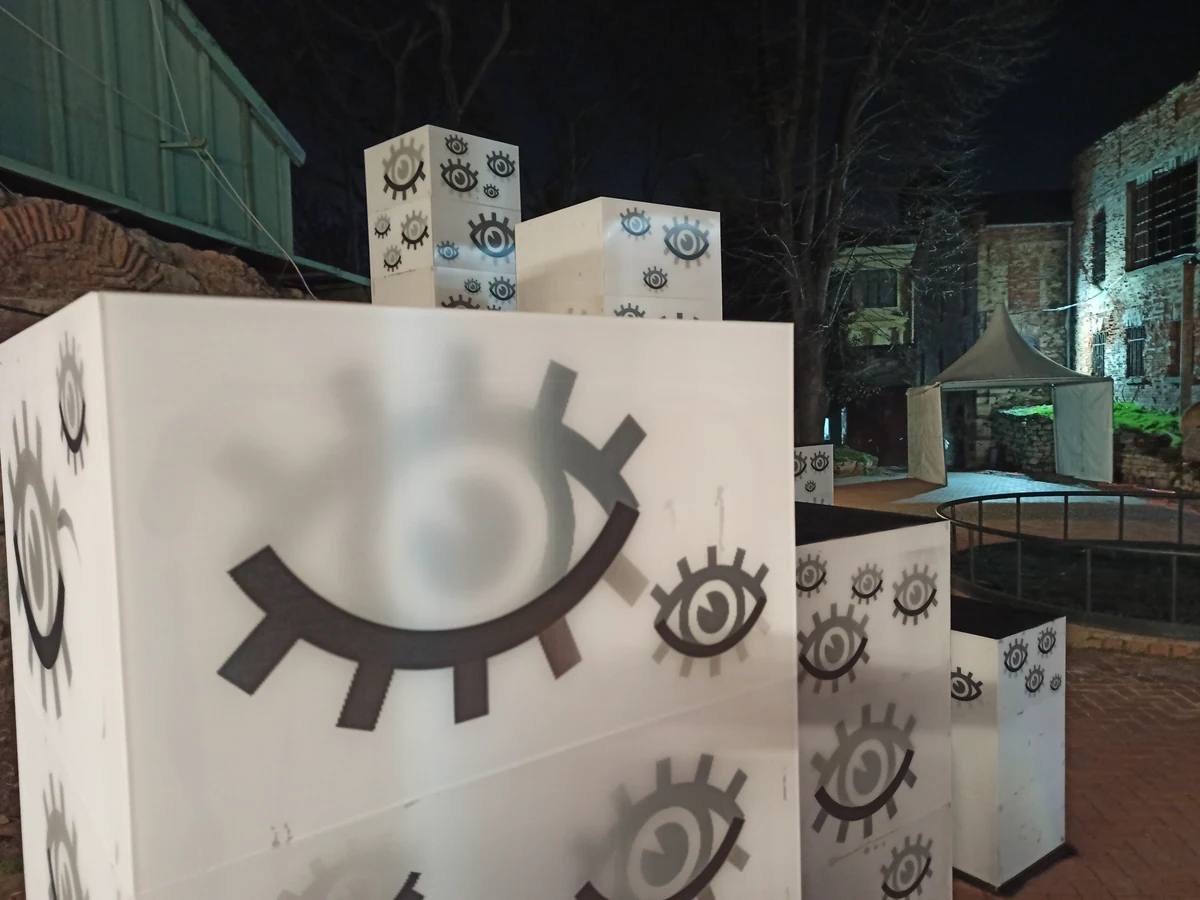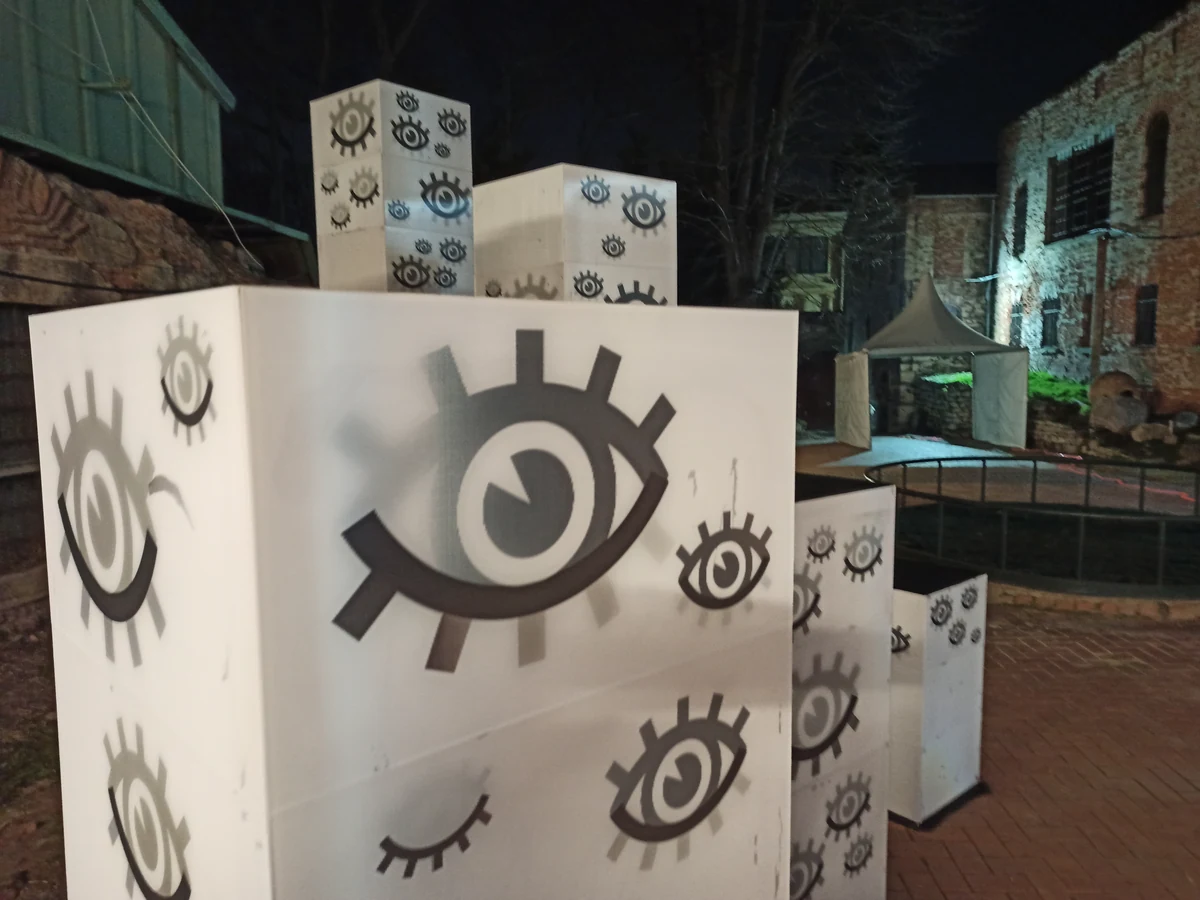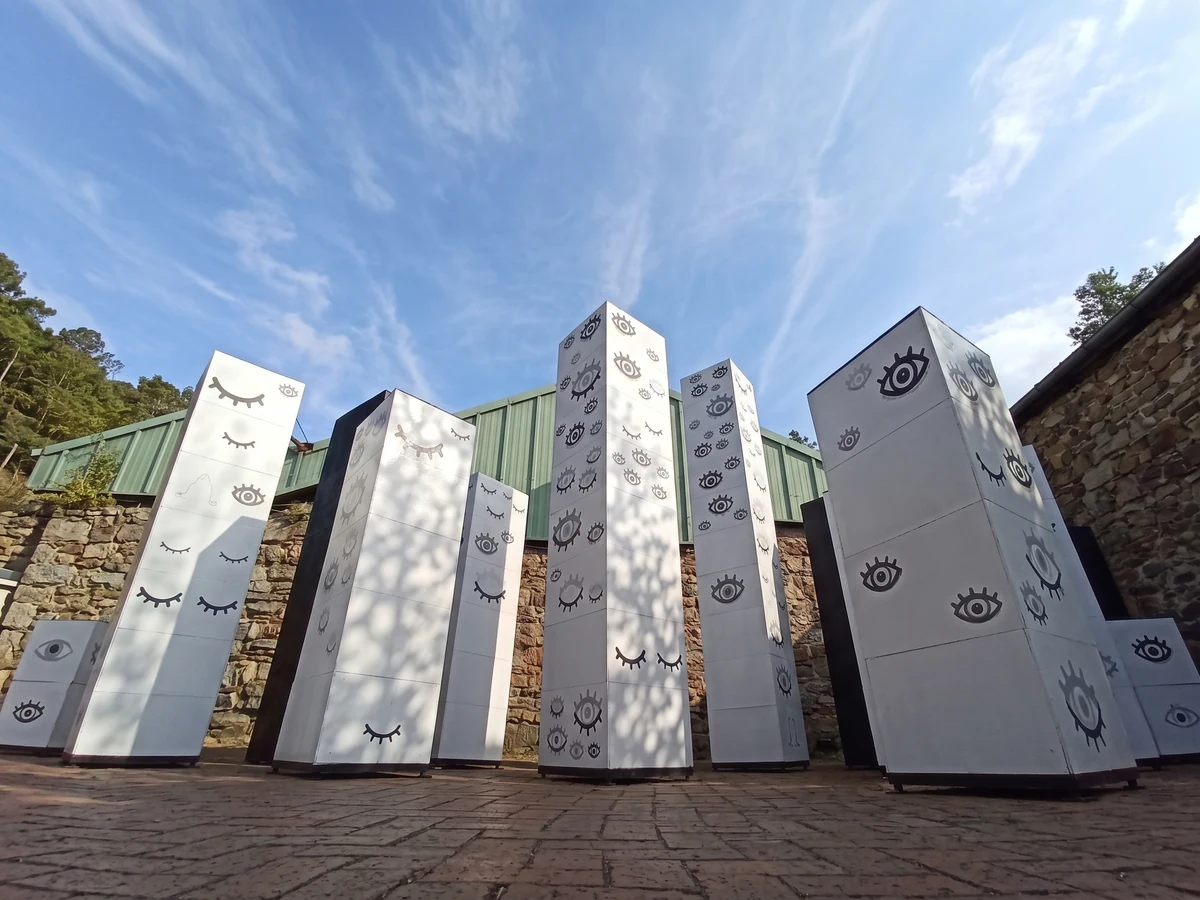
Spatial installation. 3D lenticular print on towers. 2020.
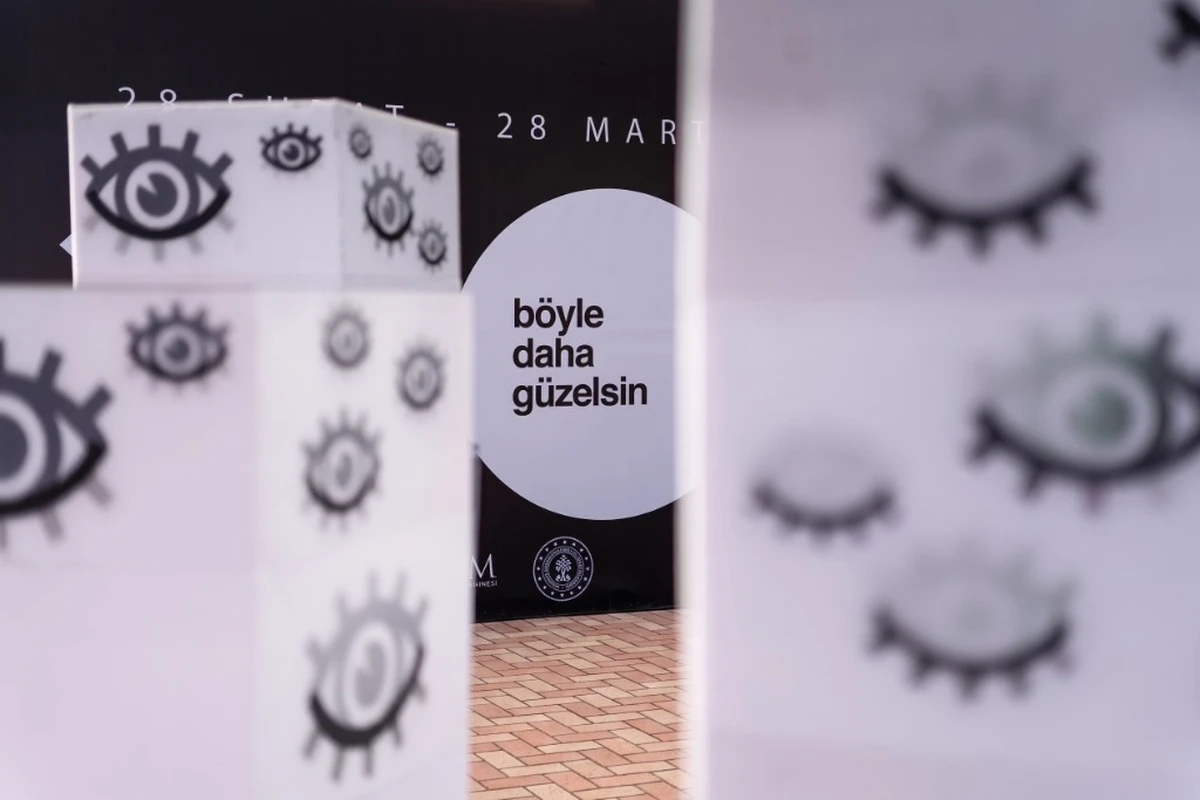
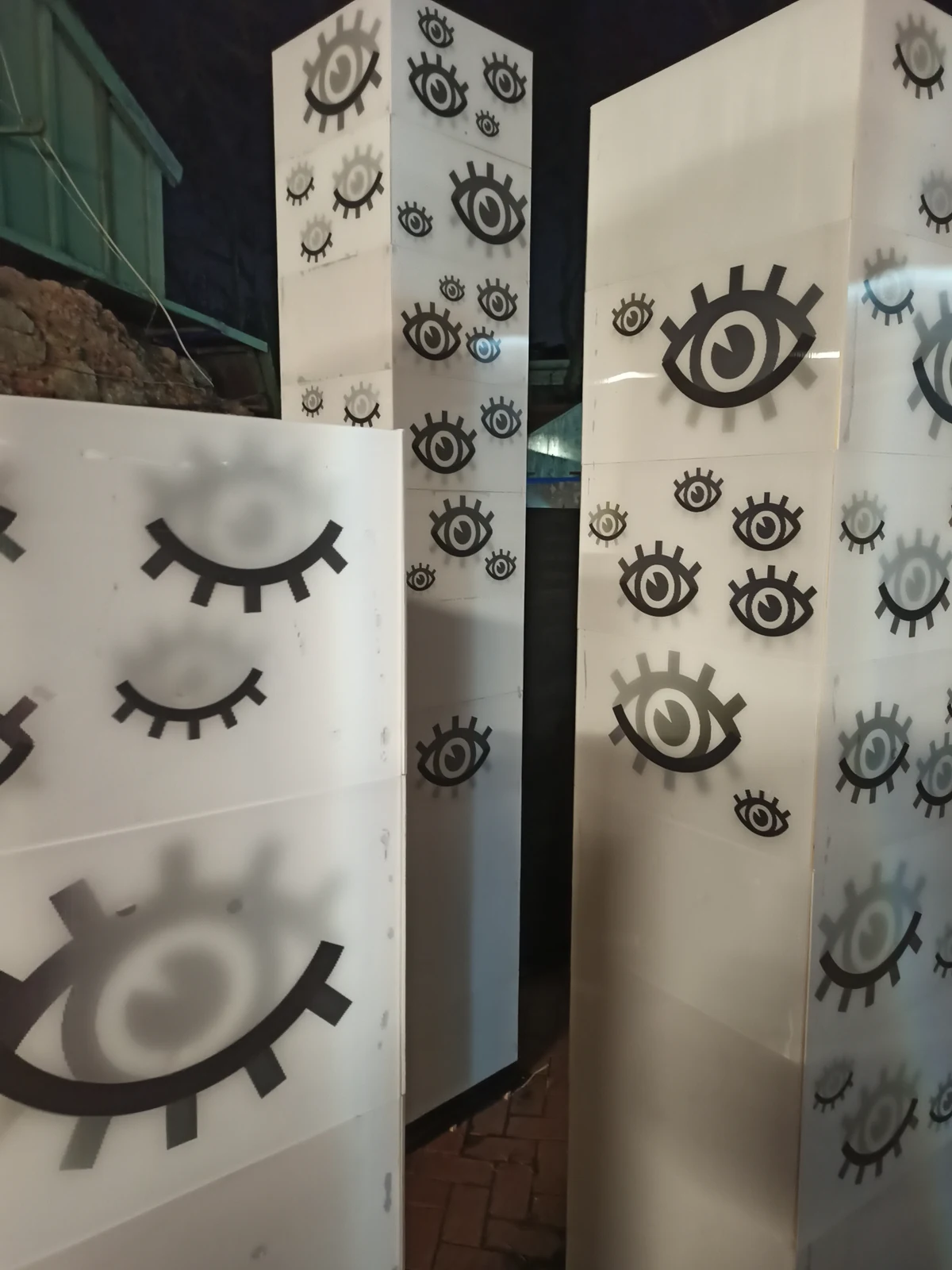
Argos is an installation of three-dimensional lenticular images encountered at the entrance to the exhibition space. The images are mounted on towers of varying heights and consist of a single motif: an open or closed eye. As visitors pass in front of the towers, the images shift. An open eye closes; a closed eye opens.
What matters here is not who the eye belongs to, but the act of looking itself. The repetition of the same eye shifts the focus away from an individual gaze and towards the relationship between looking and being looked at. Everyone entering the exhibition activates the images through their own movement. In a sense, it is the visitor who makes the eyes open and close.
Yet this relationship quickly turns around. At first, the visitor is the one who acts, the one whose movement produces the change. A few steps later, they become aware of the eyes looking back at them and suddenly find themselves on the other side of the gaze. The boundary between observer and observed is continually displaced by the visitor's own movement.
This reversal is central to Argos. The distance between looking and being looked at is perhaps not as stable as we tend to assume. When we watch someone, we naturally experience ourselves as the subject of the gaze. But the moment we realise that we, too, are caught within another gaze, that position begins to shift. The work turns this simple encounter into a physical and almost playful experience.
This playfulness carries a more difficult history beneath it. Referring to the exclusionary ways of looking to which the artists participating in the exhibition have, at different points, been subjected, Argos does not allow the visitor to remain solely in the position of the observer. For a moment, the visitor is placed on the other side of that gaze. The intention is not to create an accusatory encounter, but to make palpable how differently a gaze can be experienced when its direction changes.
The material of the work also carries a personal history. As a child, I was fascinated by the small lenticular images that came inside sweets, most often depicting cartoon characters. The way the image changed as the object moved seemed magical to me then, even though it was no more than a simple novelty. Years later, I return to the same technique in Argos, bringing that childhood fascination into contact with a very different kind of memory.
The towers therefore do more than mark the entrance to the exhibition. They become a point where a visual technology carried over from childhood encounters a more complex reflection on looking and being watched. What was once a source of amusement becomes a means of making the viewer aware of their own position.
Argos ultimately asks the viewer to take part in this play. To notice the images changing with each movement, to engage with the eyes rather than simply retreat from them, and to experience, however briefly, what it means to occupy both sides of the gaze.
Perhaps this is the work's lighter, but also most important, proposition. When we encounter eyes watching us, we do not always have to withdraw. Sometimes it is possible to turn the gaze around and play with it.