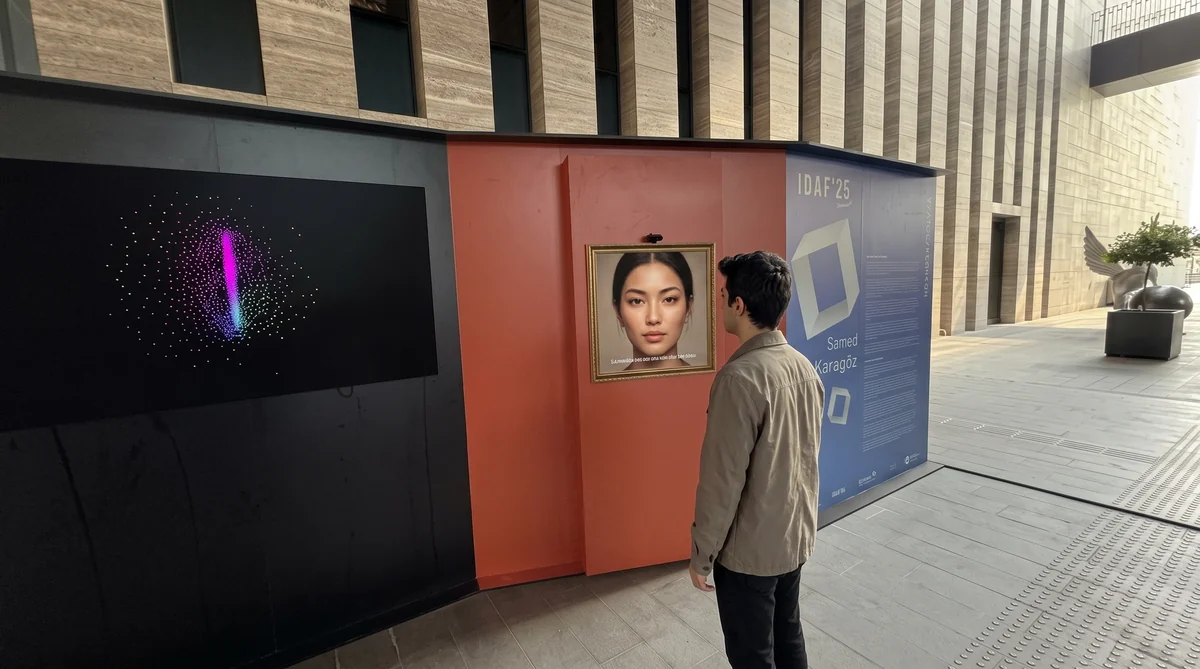
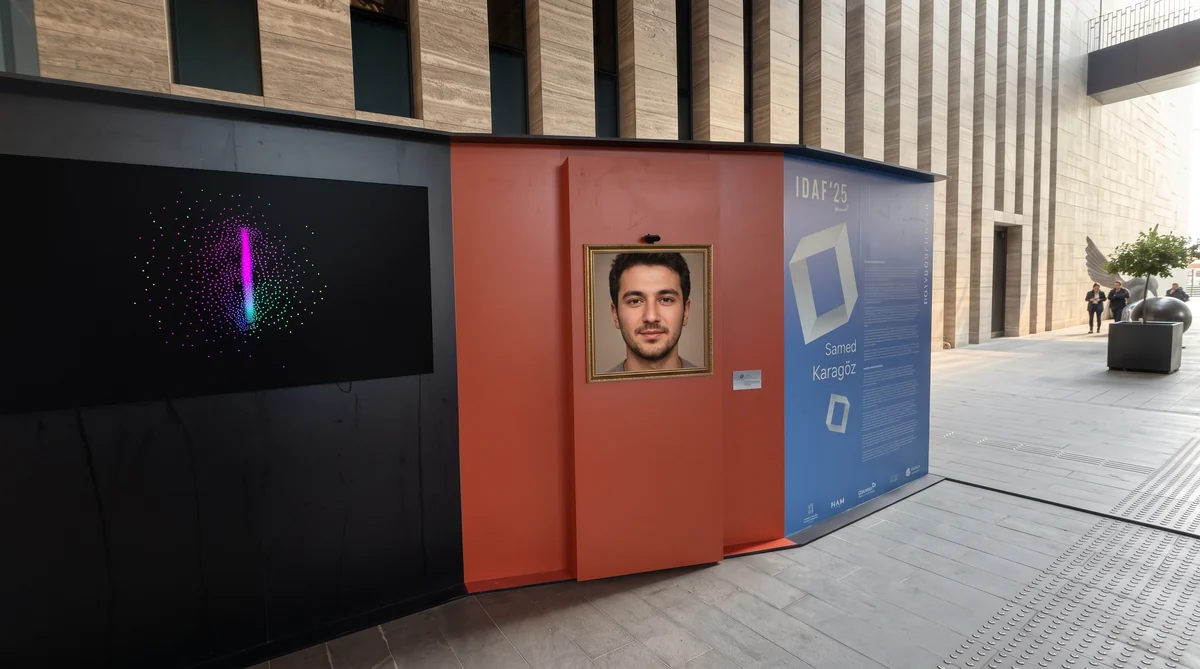
Interactive AI installation. 5th Istanbul Digital Art Festival, Atatürk Kültür Merkezi (AKM), Istanbul, 2025.
Artist: Muzaffer Malkoç · Coding: Ferit Batu Hatip, Uluç Ömer Kaymak
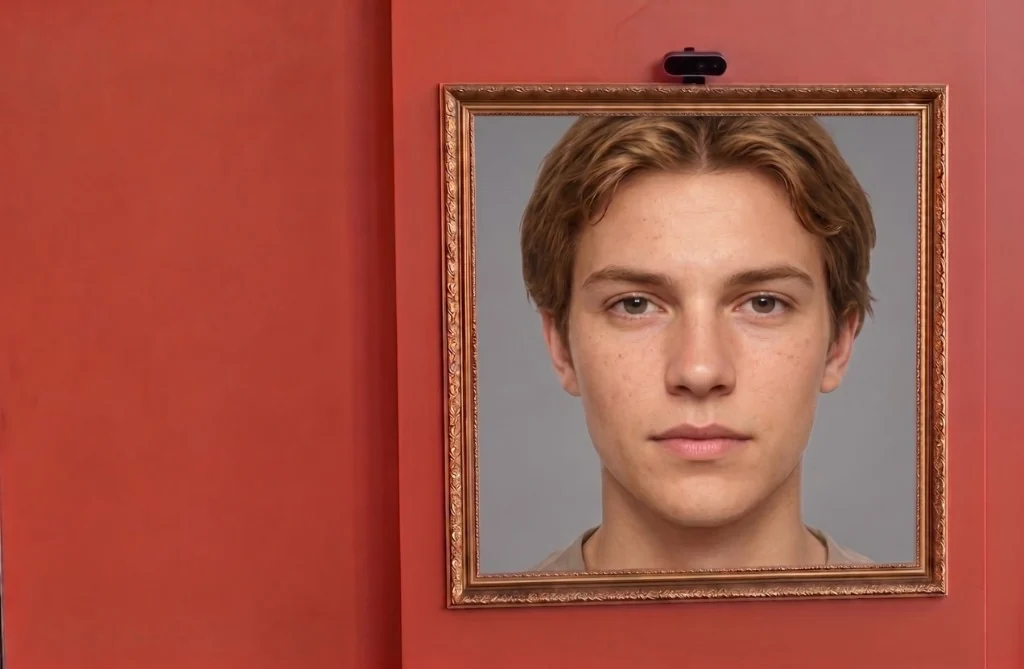
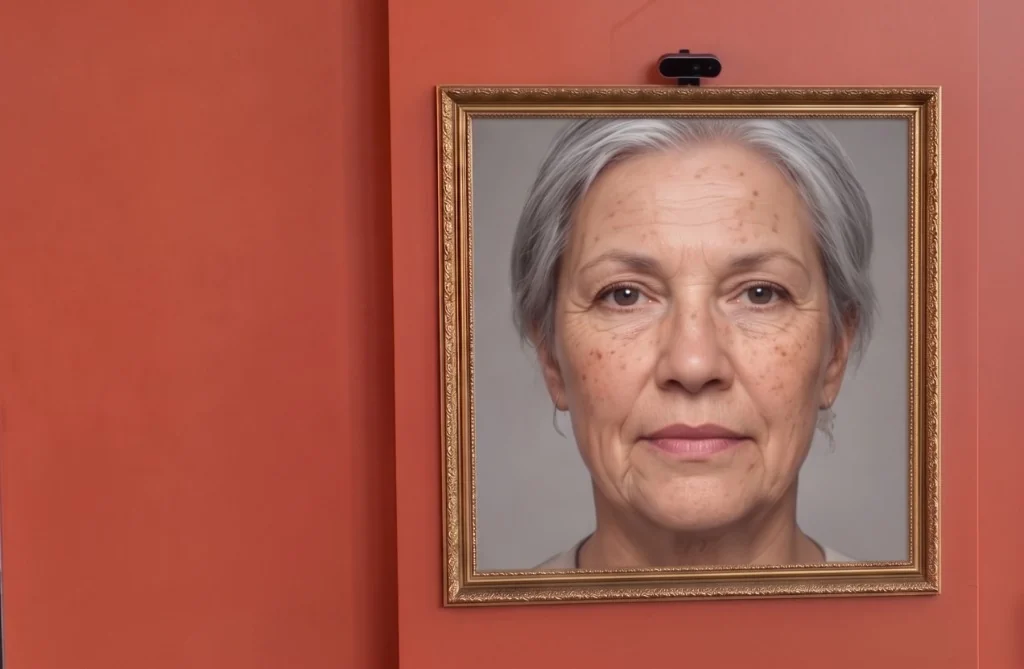
Person A is a portrait that is never finished being made. Every visitor who steps in front of the screen is folded into a single accumulating face: one image that carries, at the same time, the trace of everyone who has looked at it before and the fresh imprint of whoever is standing there right now. Nothing about it settles. There is no final version to arrive at, so there is no way to photograph the work and call that photograph Person A. What a camera would catch is only ever one moment in a process that keeps moving after the shutter closes. Each visit is its own experience, not a repeat of someone else's.
Portraits have carried a heavy job for a long time. The Fayum funeral masks painted onto mummies in Roman Egypt asked a wooden panel to hold someone's likeness past their own death. Rembrandt turned that same promise inward, painting his own face again and again as if repetition might finally catch something true. Photography, later, offered the same claim in a faster, more democratic form: point, click, and a moment is fixed forever. Person A grew out of a curiosity about what happens to that old promise once the machine doing the looking is not a brush or a lens but an algorithm that never stops updating its guess.
Gilles Deleuze once described a shift from societies built around fixed individuals to societies built around what he called dividuals: people who exist, for the systems tracking them, as scattered points of data rather than whole persons. A face read by a camera in an airport or a phone is not really a face in the old sense. It is a set of measurements, ready to be compared, sorted, matched. Person A borrows that same technical gaze and turns it back on the room. The system genuinely does read each visitor as data. But instead of sorting that data into a file, it folds it into a shared, ongoing image that nobody owns and nobody can extract themselves from once they have looked.
There is an old idea, older than any of this technology, that a self is not a fixed thing you carry around but something that only really happens in the presence of another person. Person A does not illustrate that idea so much as run on it. The face on the screen has no existence of its own between visitors. It needs someone standing there to become anything at all, and it changes the moment someone does.
Nobody who stands in front of Person A gets flattered or memorialized. They get folded in, briefly the dominant voice in a face that is already moving on to the next person. That is a strange kind of visibility: total for a second, then absorbed, then gone. The title itself refuses to specialize. Not this person or that one. Just Person A, an index that could belong to anyone and stops belonging to them almost immediately.
Masks do not fall, they evolve. Identities do not vanish, they multiply.