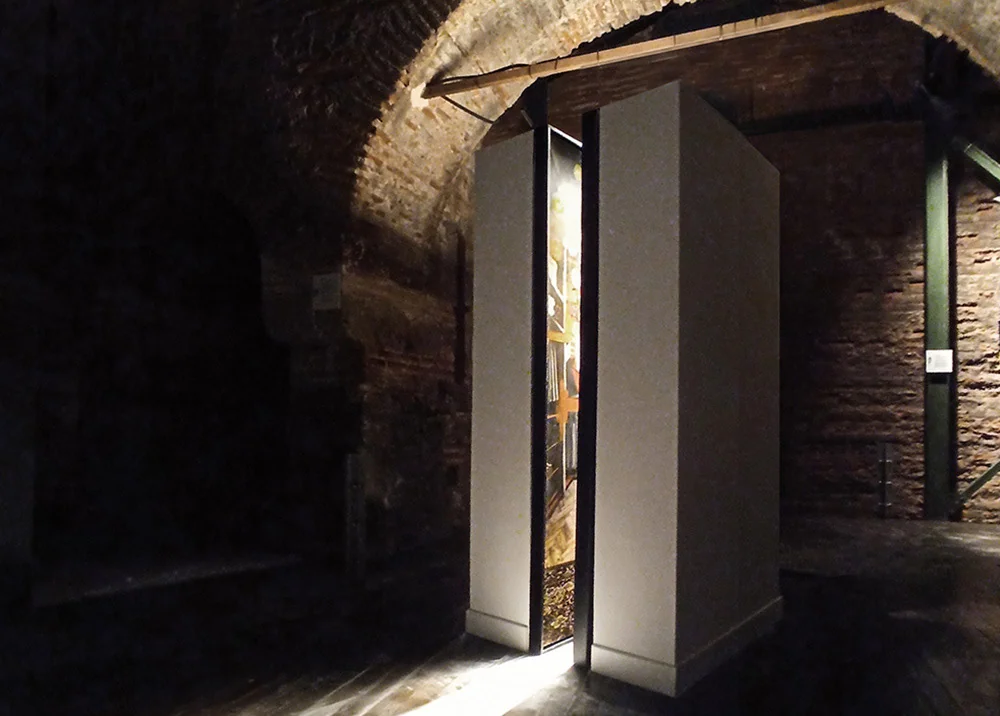
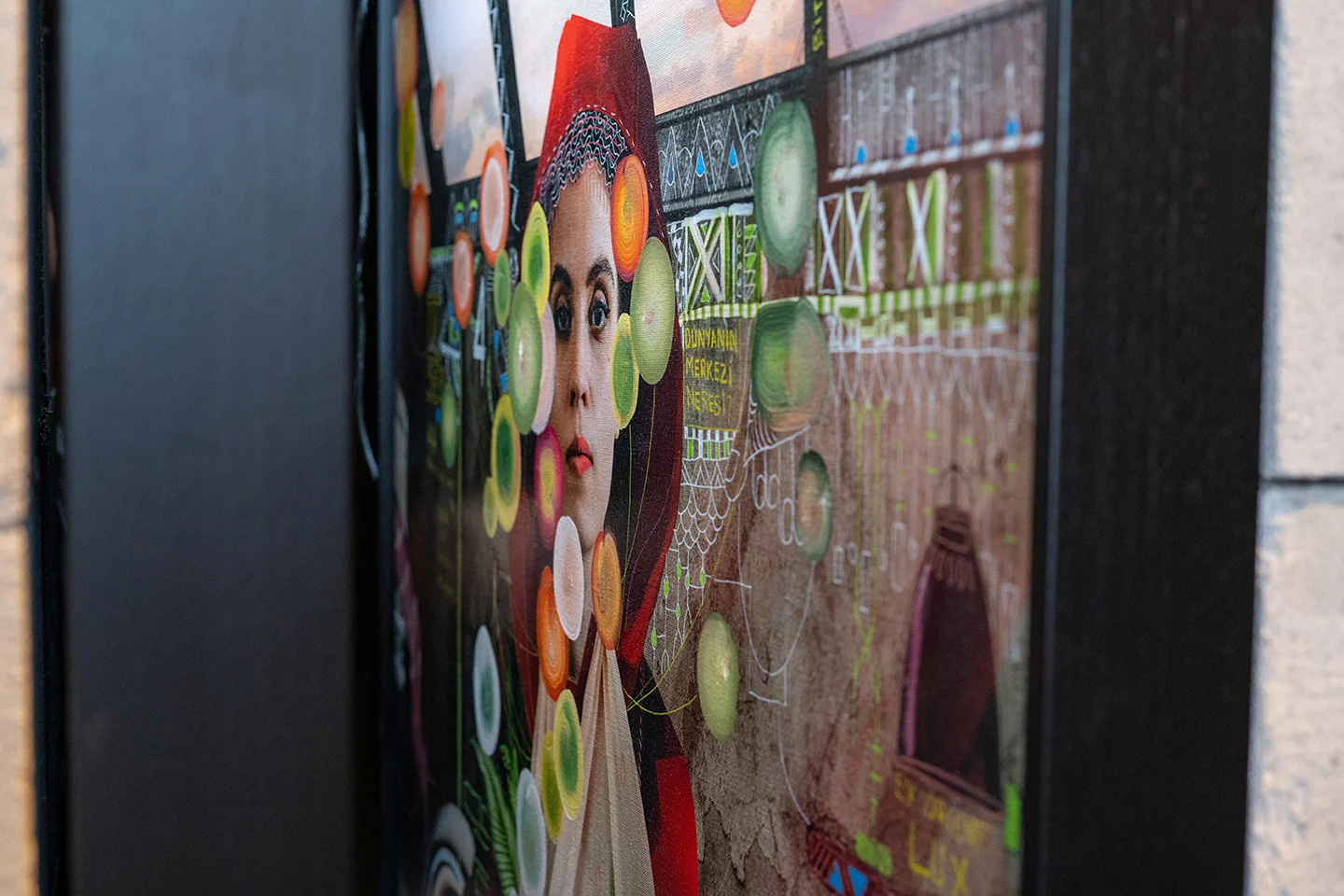
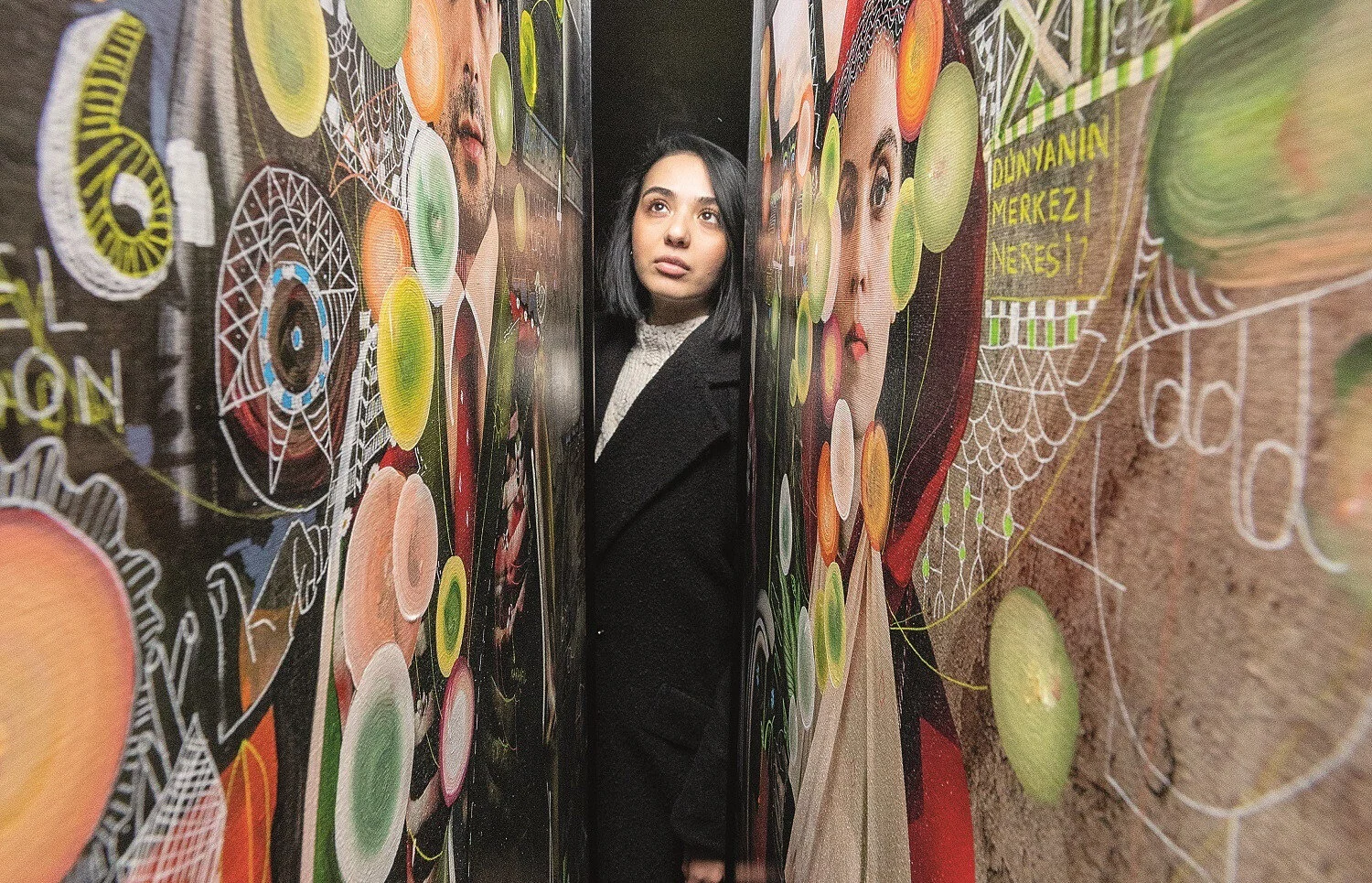
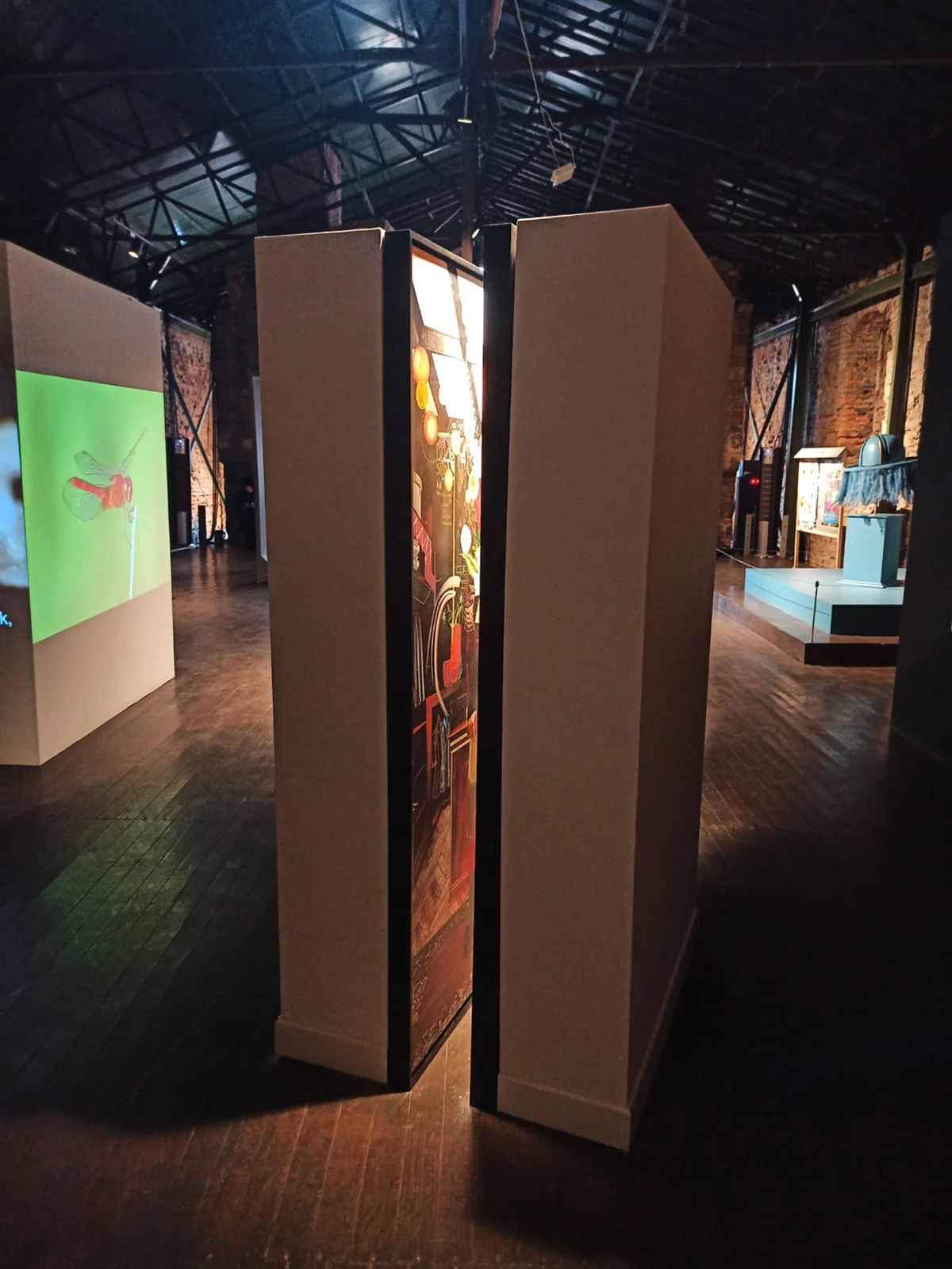
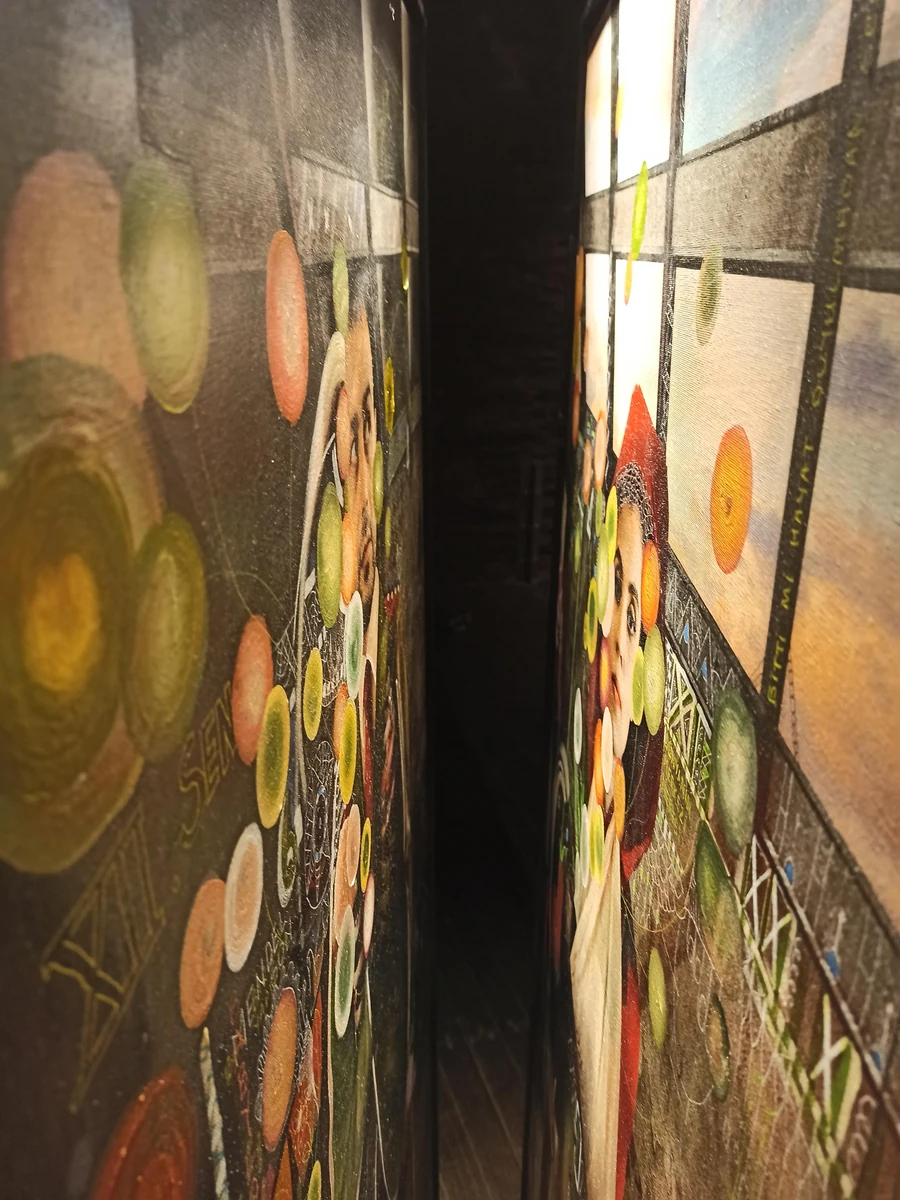
Two paintings. Each 2 m². Mixed media on canvas. Installation with controlled lighting. 2021.
Acute Angle is built around the idea that an intervention in an exhibition space can alter not only its physical boundaries, but all the relationships that take place within it.
At first glance, an exhibition space appears to be a neutral environment. Walls, openings, passages, and distances quietly instruct us how to move, where to stand, and how to look at the works. These conventions governing the use of exhibition space are so deeply embedded that we rarely experience them as rules. Instead, we tend to perceive them as natural properties of the space itself.
Acute Angle disrupts this familiar order through a small but decisive intervention. The space becomes narrower. Yet it is not only the dimensions of the space that change. The viewer’s movement, body, field of vision, and distance from the paintings change as well. An area that was previously open and accessible suddenly becomes a structure that begins to determine our behaviour.
For this reason, the work is not really about walls. It is about the power of walls to alter the relationships within a space.
The viewer can no longer move through the exhibition as they normally would. They cannot stand wherever they wish, step back from the paintings, or take them in as a whole. The space makes visible the conventions that usually remain unnoticed. The viewer begins to encounter not only the works, but the exhibition space itself.
This physical restriction opens onto a broader social experience. The environments we inhabit are not simply spaces that contain us. They also determine how our bodies may move, how close we may approach, where we may stop, and how we encounter what surrounds us. Architecture, institutions, and the established rules of everyday life often shape these possibilities without ever explicitly announcing themselves.
Acute Angle seeks to make this invisible organisation of behaviour both visible and tangible. As the intervention changes the way the viewer moves, it changes the way they perceive. The same paintings are still there, but they can no longer be seen in quite the same way. The same room remains, yet it is no longer the same room.
This transformation forms one of the work’s central tensions. The physical reduction of space does not necessarily produce a corresponding reduction in experience. On the contrary, the restricted environment makes the viewer more attentive. Distances, movements, and ways of looking that were previously taken for granted become perceptible. Space ceases to be a passive container and becomes an active part of the experience.
In this sense, Acute Angle is a reminder that space is not simply something we occupy. Space also shapes us. It influences how we move, how we perceive, and how we relate to the things around us.
The restrictive character of the work should therefore not be understood simply as a metaphor for oppression. It can instead be seen as a mechanism through which a change in conditions produces a change in experience and meaning. A seemingly minor spatial alteration can be enough to reorganise an entire system.
Acute Angle looks precisely at this moment of transformation. When space changes, space is not the only thing that changes. The people, objects, and relationships within it begin to take on different forms as well.