Digital painting. 3 works. 2006.
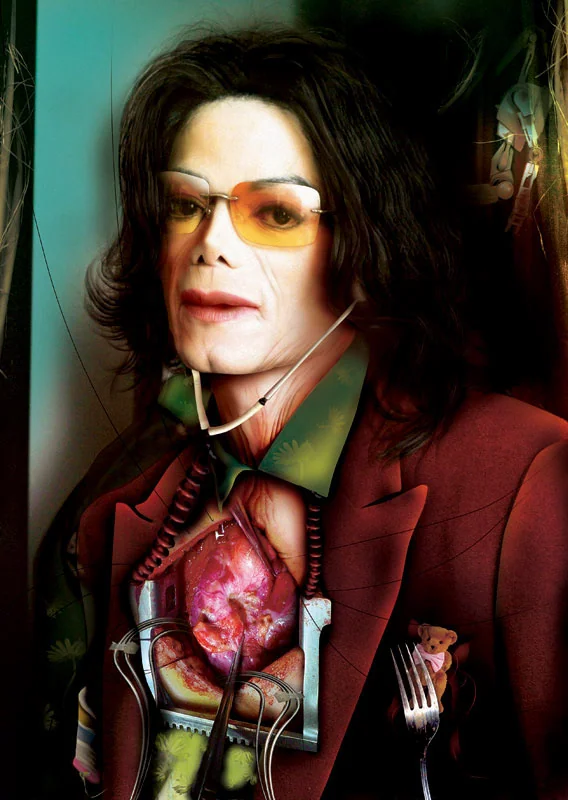
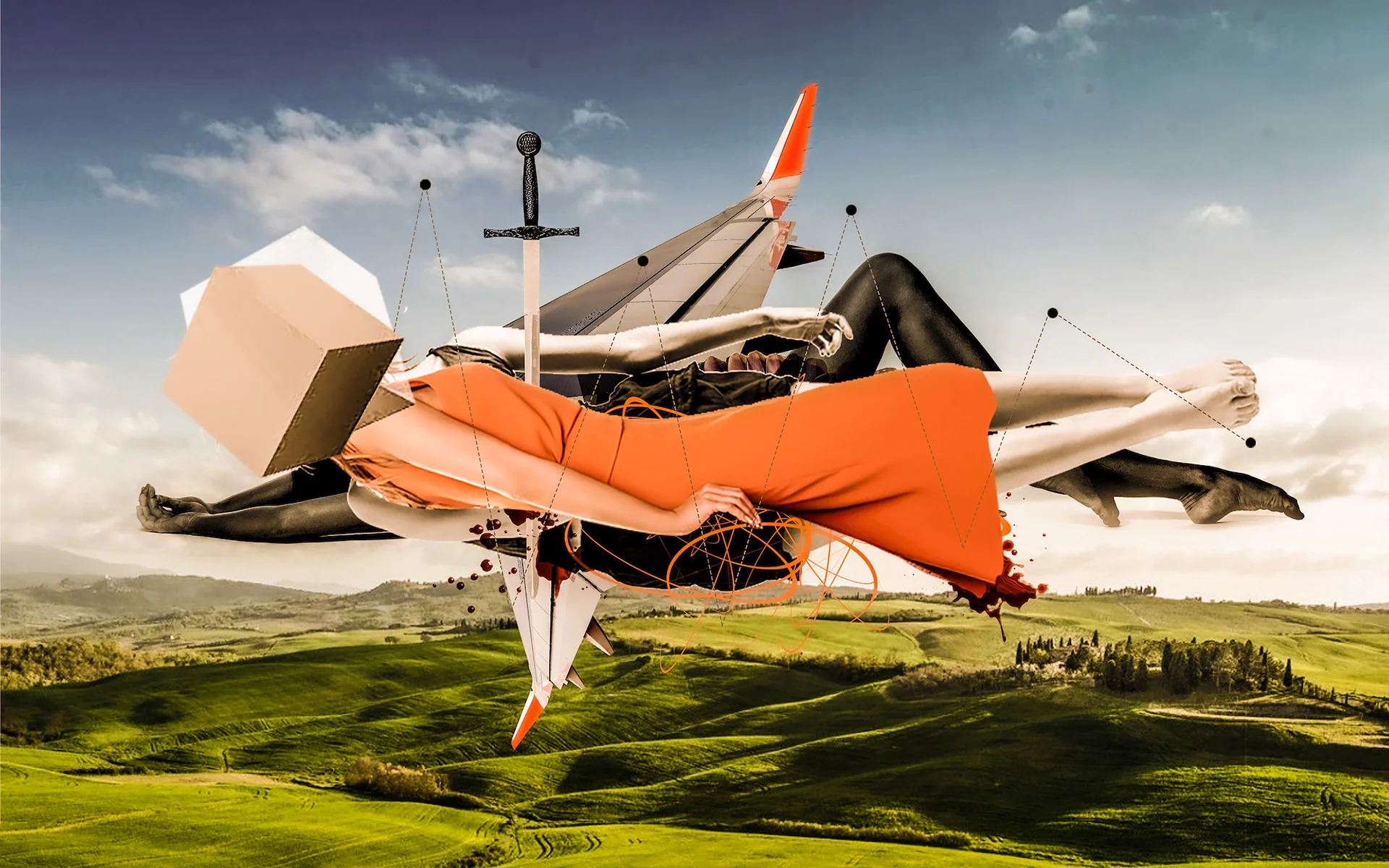
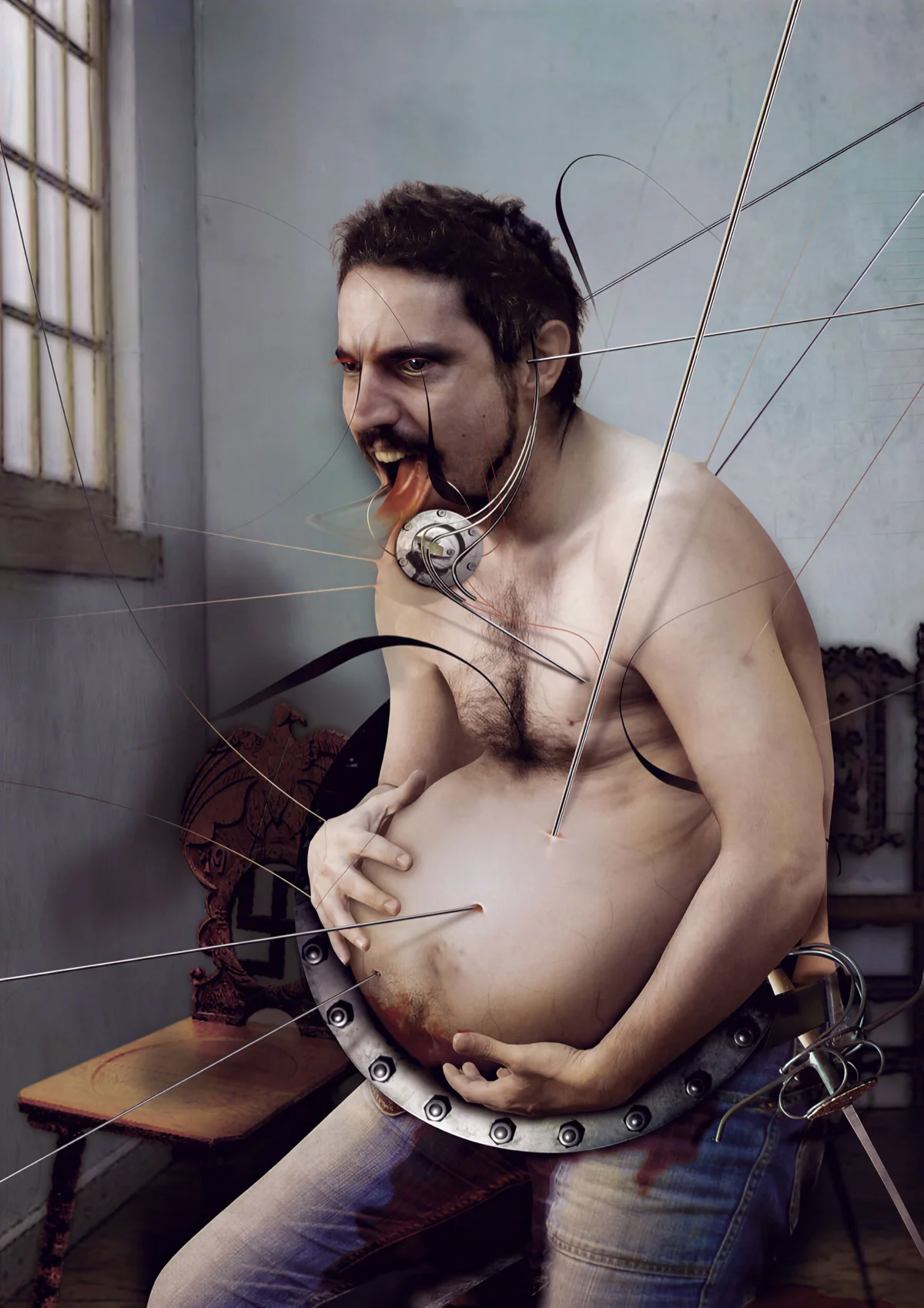
Three images. A pregnant man. Michael Jackson. A figure suspended above a green landscape.
Each of these images looks at a different aspect of the West's relationship with its own contradictions. At what a civilization does with the ideas through which it has come to define itself — equality, progress, freedom, and nature — and how those ideas are transformed in practice.
Wild Wild West is not a nostalgic title. The “Wild West” here refers less to a historical period than to a frontier that continually reproduces itself. It is a way of confronting what is new, unknown, or not yet ordered, deciding what is possible, and legitimizing whatever follows from that decision. In this sense, the Wild West was never simply a place in the past. It is a recurring present, reconstructed whenever one world makes way for what comes next.
The image of Michael Jackson opens onto a more personal and sharper side of this contradiction. He was a figure simultaneously exalted and consumed by the culture that produced him. It is impossible to say with certainty how much of the transformation of his body and appearance was his own choice and how much was shaped by the social, cultural, and economic pressures surrounding him. What is harder to overlook is what happened afterward: the culture that helped produce and transform him was quick to reclaim him as an icon after his death.
What interests me here is not Michael Jackson alone, but the larger mechanism behind this transformation. A culture shapes a body, reacts with surprise to the consequences of that shaping, and eventually turns the figure it helped create back into a symbol. The boundary between intervention in the body and the expectations imposed upon it is never as clear as it appears.
My studies in art history, and particularly in Turkish-Islamic art, have taught me to look more carefully at the ways images construct their relationship with the body. Visual culture never simply shows the body. It gives it meaning, classifies it, idealizes it, transforms it, or renders it invisible. Judgements about what is beautiful, natural, normal, progressive, or acceptable often operate quietly within these images.
The three images in Wild Wild West carry different aspects of this way of looking. Rather than bringing them together to construct a single narrative, I am interested in making visible the unexpected affinities between images that initially seem to have little in common.
For me, this has never been a view formed from the center. Perhaps that is why I am drawn not only to the West itself, but to the images through which the West represents itself. To the distance between what a civilization says about itself and what it does in the world.
Wild Wild West stands, in part, within that distance.