Maurizio Cattelan’s comprehensive solo exhibition NIGHT opened on September 10, 2026, at Berlin’s Neue Nationalgalerie, on view through March 2027. Staged in conjunction with Cattelan receiving the honorary 2026 Preis der Nationalgalerie, the project marks the Italian provocateur’s first major museum survey in Germany.
Cattelan’s conceptual practice is anchored fundamentally in figurative sculpture. Utilizing wax and silicone, his hyperrealist effigies stage theatrical disruptions: La Nona Ora (1999) struck Pope John Paul II down with a celestial meteorite; Him (2001) presented an innocent schoolchild on his knees who, upon approach, revealed the face of Adolf Hitler. In these works, hyperrealist mimesis operates as a trap: somatic plausibility disarms the spectator before moral vertigo sets in.
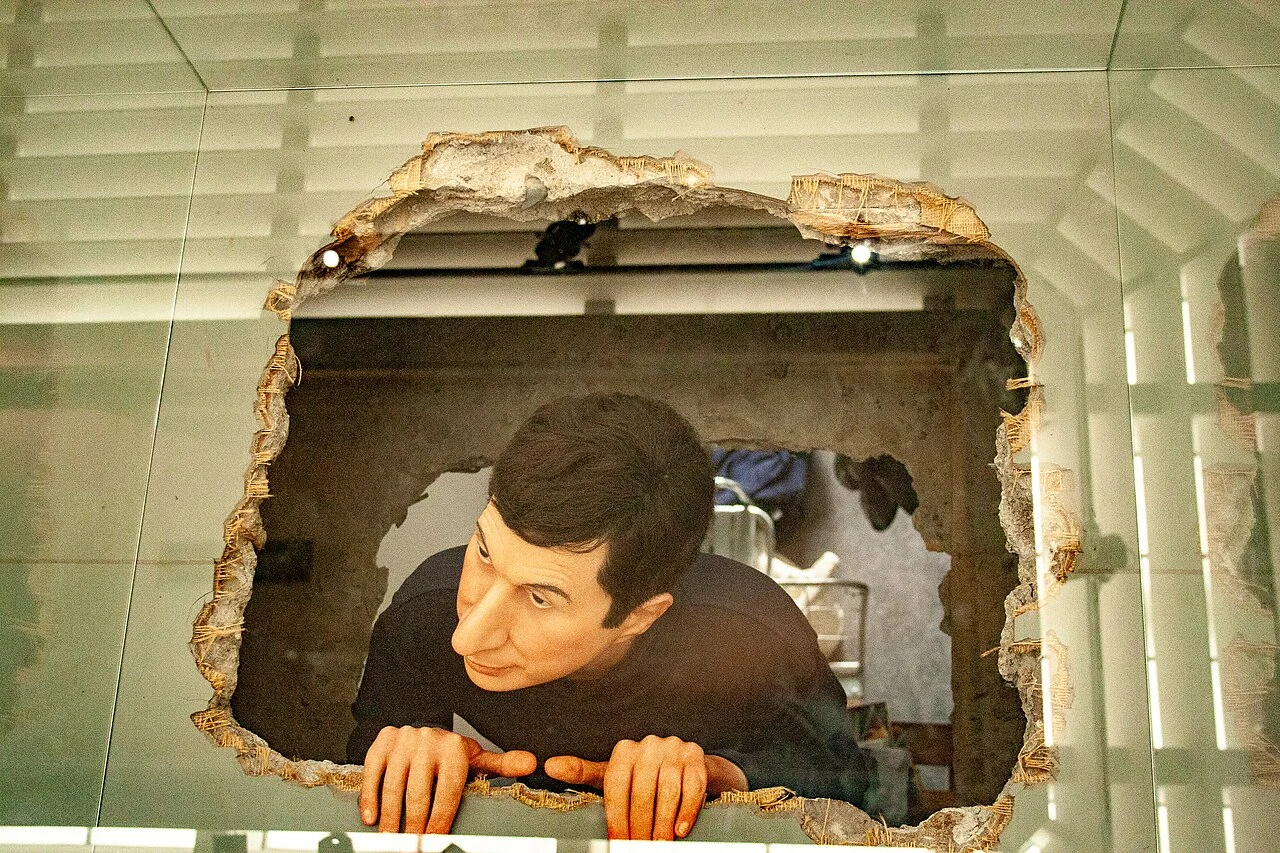
Cattelan’s figures exemplify the operational mechanics of irony within contemporary art. Irony installs an unbridgeable chasm between manifest signifier and latent intention. Because the boundary between authentic pathos and cynical mockery remains deliberately blurred, his sculptures sustain contradictory ideological readings.
Yet systematic irony courts real exhaustion. When irony becomes predictable, the public defaults to treating all artistic encounters as spectacles. His 2019 duct-taped banana, Comedian, devolved into a global viral commodity, an institutional self-critique consumed by the market it satirized. That viral celebrity frequently eclipses the genuine existential gravity carried by his sculptural bodies.
Within the lineage of hyperrealist sculpture, Cattelan occupies an instructive position. Where 1970s pioneers Duane Hanson and John De Andrea deployed fiberglass casts to memorialize working-class Americans—janitors, shoppers, tourists—Cattelan repurposes identical techniques for sovereigns and tyrants. The craft remains constant; the ideological target shifts toward power itself.
Staging NIGHT within Mies van der Rohe’s transparent, light-flooded modernist glass temple presents a poetic architectural paradox. Encountering figures of mortality and dark comedy within a monument consecrated to total visibility forces an encounter between Enlightenment transparency and Cattelan’s existential night.