Imagine covering the caption of a photograph and looking solely at the visual field. We can meticulously describe the lighting, the recorded objects, and the physical distances separating the figures. Then we reveal the caption. A name, a date, or a geographic location immediately transforms the narrative we had begun to construct. The photograph itself has not changed a single pixel, yet the questions we address to it are radically reoriented.
The question of what remains when a human being is captured connects photography to my painting and computational practice. The relationship between photography and memory is not resolved merely because an image has fixed an instant in time. How that image was subsequently selected, captioned, catalogued, and made accessible to others actively shapes the historical conditions of remembrance.
For this reason, the archive cannot be conceived merely as a passive repository where inert files await discovery. It constitutes an active institutional apparatus that manufactures documentary identity and establishes relations among disparate records. Discerning this apparatus does not require abandoning trust in the photographic medium; rather, it helps us determine precisely which claims can be corroborated by photographic evidence.
What Can a Photograph Document?
The presence of a face within an image does not grant us unmediated access to what the sitter was thinking at that precise moment. Nor does the photographic documentation of a room record every historical event that transpired within its walls. A photograph yields verifiable evidence concerning specific visible relationships; in leaping from that optical evidence to a comprehensive biography, corroborating documents and oral histories remain indispensable.
The critical distinction between observation and interpretation emerges in ordinary description. Stating that a person's head is bowed downward and declaring that they are suffering from profound grief do not constitute equivalent statements. The latter may be a plausible, empathetic interpretation; however, presenting it as an established fact confirmed by the image collapses the necessary hermeneutic distance.
Preserving this distance does not diminish the potency of photography. It allows us to perceive what the document genuinely carries with greater clarity. An institutional catalogue entry that candidly articulates ambiguity can prove far more intellectually valuable than a seamless narrative that arbitrarily resolves every unknown. A photograph permits what is known and what remains unknown to coexist upon the same surface.
When working with archival imagery, the primary imperative is to return to the original accession record whenever possible. The abbreviated caption found beneath a republished digital file on social media often diverges significantly from the archive's primary finding aid. Captions are frequently truncated, dates rounded, or single images divorced from comprehensive photographic series. Verifying these contingencies requires returning directly to the institutional source.
Selection That Begins Beyond the Frame
The photographer selects the initial frame; yet following that shutter release, a sequence of non-photographic selections unfolds: Which negative is preserved? Which print is accessioned into a curated portfolio? Which file is featured as the lead thumbnail? Adjacency within a physical photo album produces entirely different readings than algorithmic ranking in a database search result. The identical image highlights distinct formal details depending on the matrix within which it is positioned.
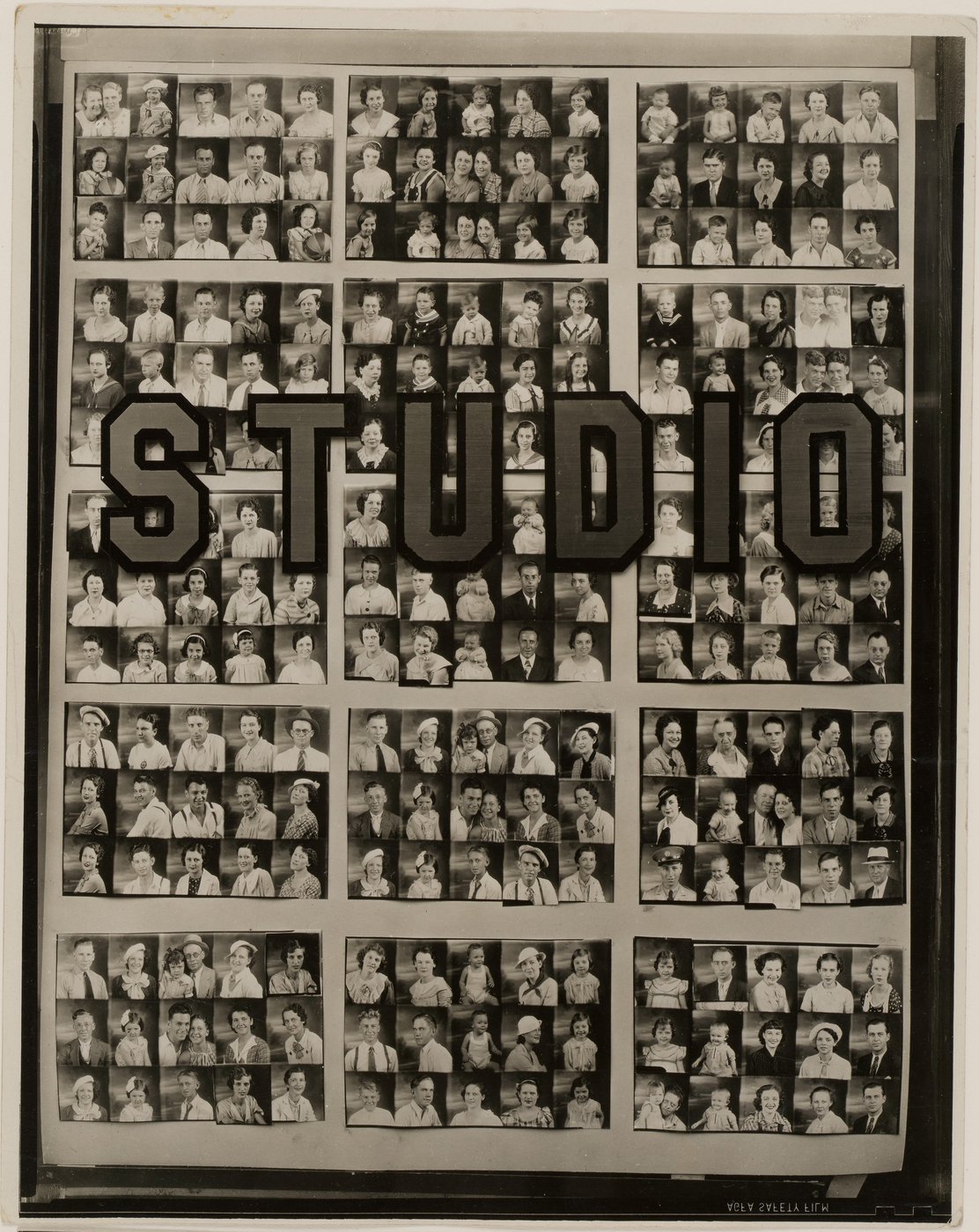
The initial image of a series is frequently interpreted as the hermeneutic key to the entire body of work. Yet this primacy may not have existed during the photographic act; it was often constructed later by an editor, curator, or archivist. Sequence must therefore never be regarded as a neutral, transparent container.
Titling similarly choreographs the gaze. Confronted with a geographic place name, our eyes search for architectural motifs; given a personal name, we focus upon facial expression. A date anchors the image to concurrent political crises. These are legitimate functions of metadata. However, if the provenance of a caption is unrecorded, it should never be uncritically assumed to reflect the photographer's authentic voice.
Each of these editorial interventions generates interpretive possibilities. Yet the presence of editorial selection must not be conflated with malicious censorship. Archival decisions are shaped by material constraints, physical storage limits, and historical cataloguing standards. Designating a specific archival absence as deliberate political erasure requires rigorous historical corroboration beyond the absence itself.
Layers of a Record at SALT
An archival entry in the SALT Research collection documenting conceptual artist Cengiz Çekil's work Dönüşüm / Conversion concretizes these critical distinctions. Identified by accession code CEKW039, the record bears the date 1981. The artwork description enumerates chicken feeders, copper plate, incandescent bulbs, electrical equipment, and alternating current. The record type, however, is classified as a photograph. Multiple high-resolution JPEG files are appended beneath this singular entry. SALT Research, CEKW039
Here, one must rigorously separate the physical installation from the photographic document that records it. The list of industrial materials does not describe the physical chemistry of the JPEG file. The photograph grants us sensory access to an ephemeral work fabricated from everyday materials. Archival metadata that sit side by side on a webpage belong to entirely different ontological tiers.
A similar precision is required regarding chronology. The date 1981 listed in the catalogue cannot be assumed to denote the creation date of the digital scan, nor the exact instant the photographic shutter clicked. Establishing such chronologies requires analyzing archival metadata fields alongside supplementary documentation. Our responsibility is to transmit what the record provides without unverified extrapolations.
This example demonstrates that reading an archive is not an exercise in solving sensational mysteries. Often, the most crucial work consists of refusing to confuse the document with the thing documented. The distinctions separating file name, artwork title, accession code, and temporal metadata determine the scholarly integrity of any subsequent historical writing.
How Can We Keep the Unknown Visible?
When an individual in an archival photograph remains unidentified, it is tempting to fill the silence with a projected identity. Attire, posture, or facial expressions evoke powerful cultural associations. Yet emotional resonance does not constitute an identity. When we transform a visual resemblance into a factual assertion, we appear to enrich the photograph with information; in truth, we introduce an unverified ambiguity.
In critical writing, three discursive tiers should remain transparent: what is directly observable within the image, what is corroborated by archival finding aids, and what belongs to our interpretive commentary. Each is valuable, but none should usurp the authority of another. The linguistic nuance between writing “the record indicates” and “the image suggests” carries profound ethical weight.
An archival silence does not mandate that critical writing must grind to a halt. We can delineate precisely which historical questions the absence leaves unresolved. Rather than fabricating an identity for an unnamed subject, we can analyze their spatial position within the frame, the vector of their gaze, or the global circulation of the print. The boundary of the inquiry becomes an integral component of the text.
For collective memory, this discipline is vital. When we overwrite a photograph's silence with our personal narratives, we effectively colonize the historical mystery of the depicted individual. Not every human face exists to deliver a tidy, consumable narrative. Before an archival image, we must allow the question to remain open.
The Artist’s Archive and the Afterlife of the Artwork
MoMA's finding aid for the Gerhard Richter archival collection documents a research folder compiled in connection with his landmark painting cycle October 18, 1977. The folder contains photographic clippings and newspaper clippings alongside installation views, critical reviews, and artist correspondence. Thus, the dossier encompasses not merely the preliminary research that preceded the paintings, but the ongoing socio-political reception that followed. MoMA, Gerhard Richter Archive Finding Aid
The coexistence of these disparate documentary materials provides a compelling hermeneutic model. A photograph serving as a compositional study for a painting and a finished painting subsequently being re-photographed for critical reviews do not share identical vectors. In the first instance, an archival document enters painterly production; in the second, the finished artwork becomes the subject of a new documentary trace. The artist's archive preserves the intersecting trajectories of these two movements.
Yet inspecting the dossier does not grant omniscient access to every creative choice executed in the studio. Preserved documents outline the material scope of an investigation; they cannot automatically explain why specific preliminary studies were rejected or how individual canvases achieved final resolution. The relationship between the archival dossier and the painted canvas must be forged through disciplined comparative analysis.
This leads to a wider aesthetic inquiry: In evaluating an artwork exclusively through its finished form, to what extent do we marginalize the documentary ecosystem that fostered its emergence? Conversely, in fixating upon process files, do we risk neglecting the phenomenological encounter demanded by the canvas itself? The archive offers an invaluable approach to the work, provided it never purports to usurp the artwork's autonomous presence.
Returning to the Photograph
In investigating the distance separating an optical image from the reality of a human life, I do not regard documentary absence as a flaw to be concealed. That distance constitutes the precise territory demanding critical thought. A photograph can preserve a face; how that face is subsequently deciphered by others is actively mediated by captions, historical networks, and new encounters.
In engaging with any archival photograph, we should begin by noting the accession code, the chronological metadata, and the provenance of the caption. Next, we locate the photograph within its broader documentary series. Refusing to settle for the first thumbnail displayed on a screen can radically shift the direction of our interpretation.
Finally, it is illuminating to cover the caption once again. What is the divergence between what we noticed at first glance and what we perceive now? Does our newfound knowledge truly belong to the visual field, or to the narrative apparatus constructed around it? When we maintain this distinction, the documentary integrity of photography and the speculative freedom of critical interpretation are mutually safeguarded.
What we can legitimately demand from the archive is not an immaculate resurrection of the past, but a rigorous workspace wherein we can correlate fragments, test our hypotheses, and keep historical absences visible. Remembering a human being often begins here: the record is present, yet human life consistently overflows its boundaries.