From April 27 through August 3, 2025, the Metropolitan Museum of Art presented Sargent and Paris, a landmark exhibition re-evaluating John Singer Sargent’s formative decade in the French capital (1874–1884). At the physical and intellectual center of the retrospective hung the museum’s prized icon: Madame X (Virginie Amélie Avegno Gautreau).
The story behind the canvas remains one of the most celebrated cautionary tales in the history of portraiture. Displayed at the 1884 Paris Salon under the discreet title Portrait de Mme ***, the painting provoked widespread moral outrage. The scandalous detail was ostensibly minor: one jeweled strap of Madame Gautreau’s plunging satin gown had slipped off her shoulder, resting casually on her alabaster arm. Yet to bourgeois Parisian critics, this unmoored strap suggested sexual availability, vanity, and calculated social defiance.
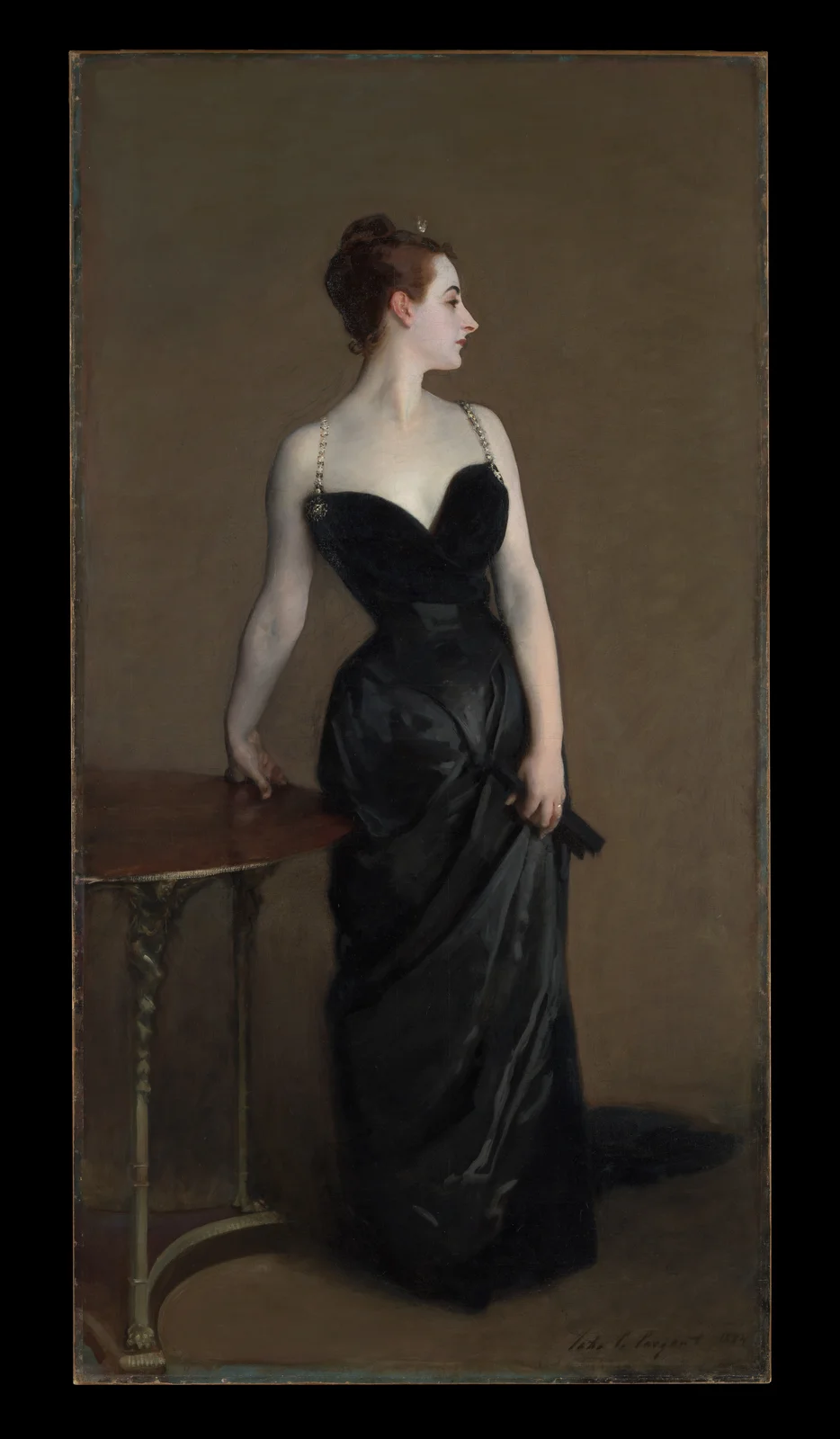
The ensuing public humiliation was catastrophic for both sitter and painter. Madame Gautreau's family demanded the canvas be withdrawn from the Salon walls; Sargent, finding his aristocratic portrait commissions in Paris instantly evaporated, repainted the fallen strap into an upright position and fled across the English Channel to rebuild his career in London.
The Met's exhibition brought together Sargent's preparatory graphite sketches, delicate watercolor studies, and intimate oil sketches, demonstrating that Madame X was never a conventional commission, but an ambitious collaborative gamble between an American expatriate painter hungry for vanguard acclaim and a New Orleans-born socialite determined to immortalize her stylized celebrity. Sargent rejected the flattering rococo conventions of contemporary society portraiture in favor of dramatic, silhouette-like contouring and aristocratic reserve.
More than a century later, Madame X endures as a testament to the latent psychological danger embedded in portraiture. A painted portrait is never an innocent document; it is a public negotiation of power, eroticism, and social vulnerability. The 1884 scandal reminds us that when a painter touches the living likeness of a subject, they risk destabilizing not only the sitter's social standing, but the institutional boundaries of their era.