In mid-September 2026, cross-Channel diplomatic and cultural negotiations concluded with a historic announcement: the 11th-century Bayeux Tapestry will be loaned to the British Museum in London during comprehensive architectural renovations of its home museum in Normandy. Measuring nearly seventy meters in length, this monumental textile chronicles William the Conqueror’s 1066 Norman Conquest and the bloody Battle of Hastings.
While conventionally referred to as a "tapestry," the artifact is structurally an embroidery: dyed wool yarn stitched directly onto plain-weave linen. This distinction is aesthetically consequential: in a woven tapestry, imagery is structurally embedded within the warp and weft; in embroidery, lines are stitched across a pre-existing plane. The figures in Bayeux function essentially as kinetic graphic drawings, defined by bold contour outlines and saturated color infill.
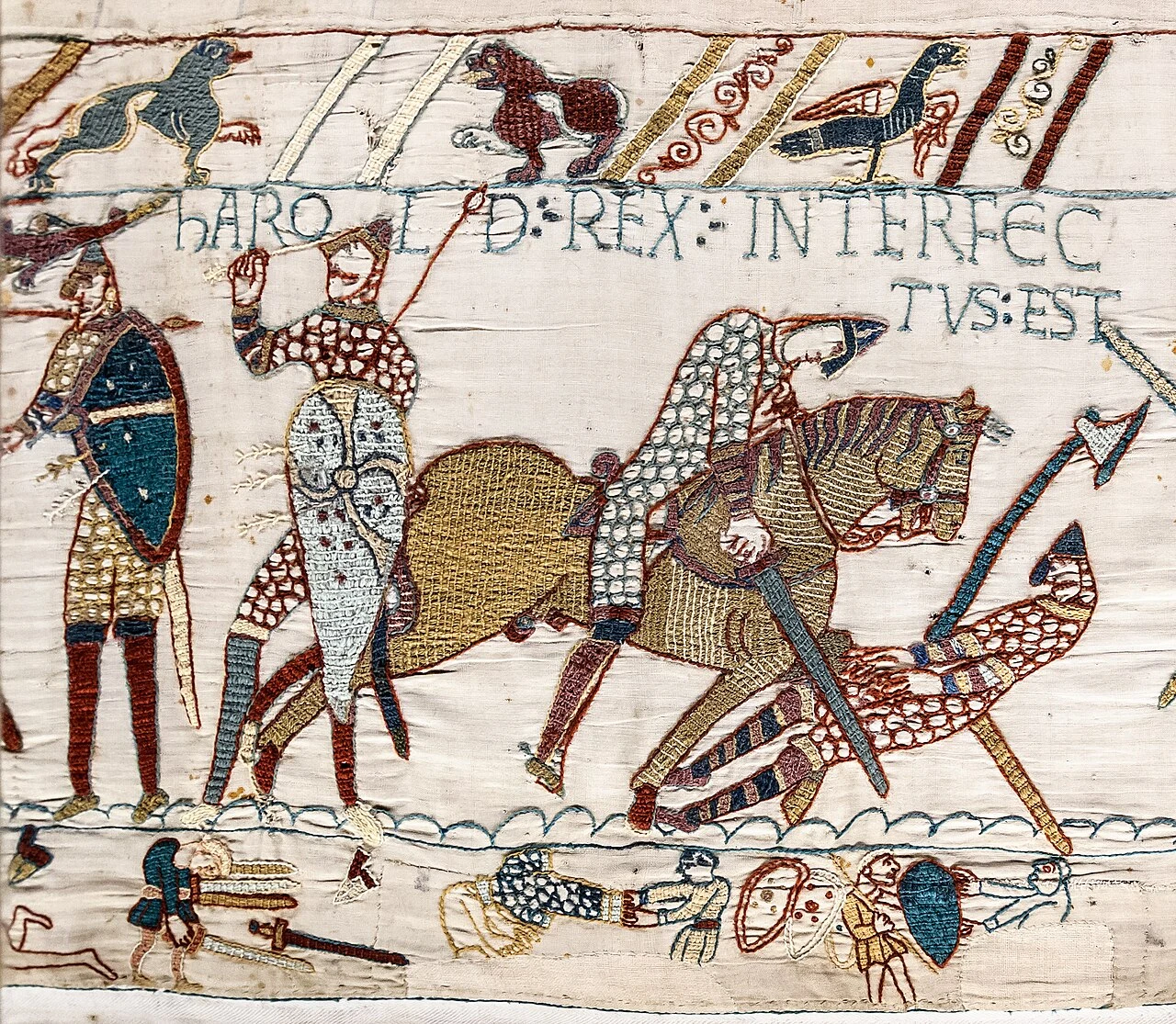
The artifact stands as the supreme secular narrative cycle of Romanesque Europe. Unfolding as a continuous horizontal frieze from left to right, actors recur across sequential episodes. Above and below the primary frieze, marginal borders feature bestiaries, allegorical fables, and graphic scenes of fallen soldiers stripped of armor. The dialectical relationship between the central heroic epic and the grotesque margins remains a perennial subject of scholarly debate.
Writing for The Guardian in September 2026, chief cultural writer Charlotte Higgins posed an incisive question: what does the contemporary fascination with the Bayeux frieze disclose about our own unstable geopolitical moment? Staging a millennium-old chronicle of invasion, regime collapse, and violent displacement amid the European conflicts of 2026 charges the textile with searing contemporary relevance.
For contemporary figurative art, the tapestry is instructive for its orchestration of collective kinetic mass. The figures are not individualized psychological portraits; sovereigns, cavalry, and foot soldiers are identified through heraldic accoutrements and symbolic gestures. This collective figurality stands in radical contrast to contemporary figuration's hyper-focus on solitary interiority, reminding painters that historical trauma can be rendered through rhythmic choral massing.
Transporting a 950-year-old textile across international borders triggered acute conservation concerns among textile specialists. The long-term physical consequences of this loan will depend upon forensic conservation monitoring once the linen returns to Normandy.