On July 26, 2024, during the opening ceremony of the Paris Summer Olympics along the River Seine, a theatrical tableau titled 'Festivité' erupted into a worldwide cultural controversy. Staged along the footbridge of the Passerelle Debilly, the sequence featured DJ Barbara Butch flanked by drag performers and vogue dancers gathered behind an elongated banquet table. At the climax, French singer Philippe Katerine appeared reclining half-naked on a fruit platter painted entirely in glittering blue, embodying Dionysus, the Greek god of wine and celebration.
Millions of international television viewers immediately perceived the scene as an irreverent parody of Leonardo da Vinci's sacred Renaissance fresco, The Last Supper. Clerical bodies—led by the French Bishops’ Conference and conservative political leaders across continents—issued fiery condemnations decrying what they regarded as religious desecration.
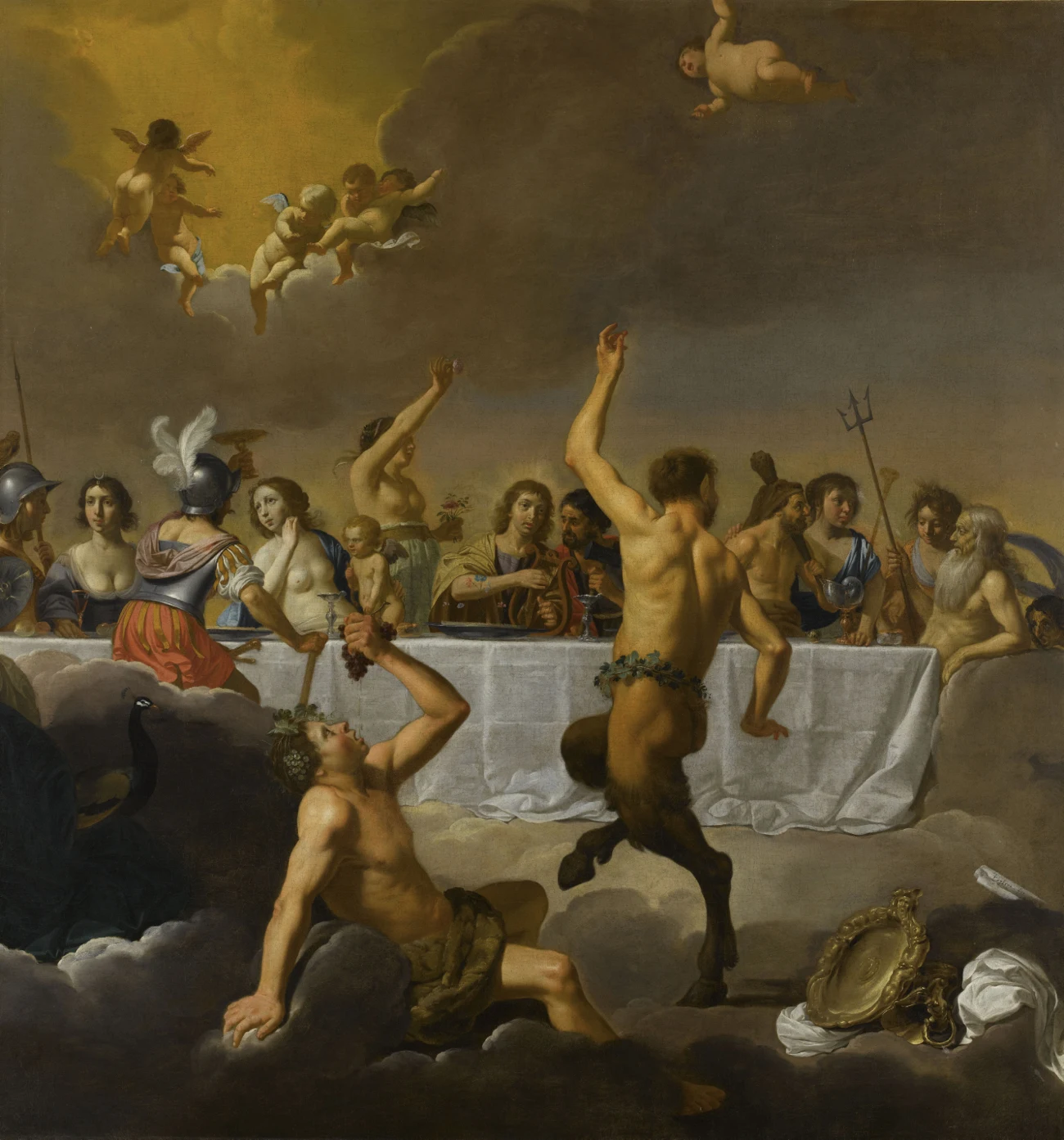
Artistic director Thomas Jolly vehemently disputed the charge. Speaking on French broadcaster BFMTV, Jolly explained that the tableau had been conceived not as a Christian reference, but as an Olympian feast celebrating French festivity and Greco-Roman mythology. The direct art historical source cited by curators was Dutch Golden Age painter Jan Harmensz van Bijlert’s circa-1635 canvas Le Festin des dieux (The Feast of the Gods), housed in Dijon’s Musée Magnin. In Bijlert’s painting, the gods of Olympus recline along a banquet table with Apollo haloed at the center while Bacchus reclines in foreground revelry.
Iconography: who reads an image?
This explosive clash vividly illuminated the stakes of iconography, the methodological framework formalized by German art historian Erwin Panofsky in his 1939 masterwork Studies in Iconology. Panofsky proposed that images are decoded through three progressive strata: primary or natural subject matter (men, women, a table, fruit); secondary or conventional meaning (identifying biblical or mythological types); and tertiary intrinsic meaning (the deeper ideological mentality of a civilization). In Paris, these strata collided violently. At the secondary level, Western collective memory is so overwhelmingly conditioned by Leonardo's Last Supper that any horizontal banquet composition is instinctively read as Christ and his apostles, regardless of curatorial intent.
Yet horizontal table arrangements have belonged to pagan antiquity long before Christianity. From Renaissance marriage feasts to mythological Bacchanals, banquet iconography has always been fluid and contested. When Paolo Veronese painted his monumental banquet for Venice’s Dominican refectory in 1573, the Roman Inquisition hauled him before the tribunal for blasphemy; Veronese deftly diffused the scandal simply by rechristening the canvas The Feast in the House of Levi.
The Paris Olympic storm demonstrates a profound axiom of visual culture: the meaning of an image is never monopolized by its author's intent. Visual meaning is generated dynamically at the intersection where an image encounters the historical, religious, and political memory of the spectator.