Encountering a portrait in isolation is one experience. Now imagine placing an administrative identity card, a critical wall text, or an interactive screen directly beside it. The painting itself has not changed, yet the questions we direct toward it are dramatically reoriented. We are no longer observing merely a face, but deciphering the dialogue established between disparate images.
As I investigate human representation across painting, digital media, and critical writing, these spatial relationships bind my diverse production spheres together. Addressing a shared inquiry across distinct mediums does not mean the works must become redundant illustrations of one another. Fertile divergences coexist alongside shared motifs.
Engaging curatorial thinking from the spectator's perspective means examining how an exhibition orchestrates these spatial and conceptual relations. Which artworks were selected, how were they juxtaposed in the gallery, with which explanatory texts are they accompanied, and in what architectural environment are they encountered? An exhibition can generate an interpretive horizon distinct from the simple arithmetic sum of its constituent objects.
How Does an Exhibition's Central Inquiry Become Visible?
An exhibition title provides an initial orientation. Yet we cannot assume that every concept suggested by the title is genuinely realized within the gallery. We must first investigate which physical details substantiate that theme. That a title is poetic does not guarantee that the dialogues among individual objects are coherent.
An exhibition's core thesis is sometimes stated explicitly in the curatorial wall text. At other times, it emerges through recurring formal motifs or productive frictions across the artworks. Shared materials, overlapping subject matter, or common historical periods provide points of departure. Yet formal resemblance alone cannot account for all connections.
For example, the presence of numerous portraits across an exhibition does not prove that all works share an identical theory of identity. One portrait investigates biometric recognizability, another anonymity, while a third explores the fluid mutation of the countenance. Divergent inquiries sheltered beneath a shared umbrella enrich the exhibition's intellectual depth.
As viewers, we can reformulate our understanding of the central thesis at the conclusion of our visit. What shifted between the introductory gallery and the final exit? Did the initial concept become sharper, or did it acquire productive ambiguities? This cognitive shift reveals how effectively the exhibition mobilized thought.
A Point of Departure Through The Family of Man
MoMA's landmark 1955 exhibition The Family of Man, curated by Edward Steichen, represents an indispensable historical case study. Museum records define the exhibition—which assembled hundreds of photographs from diverse geographies around shared human experiences—as an ambitious photographic essay in three-dimensional space. The institutional archive provides exhibition checklists, press releases, and installation views. MoMA Exhibition Archive: The Family of Man
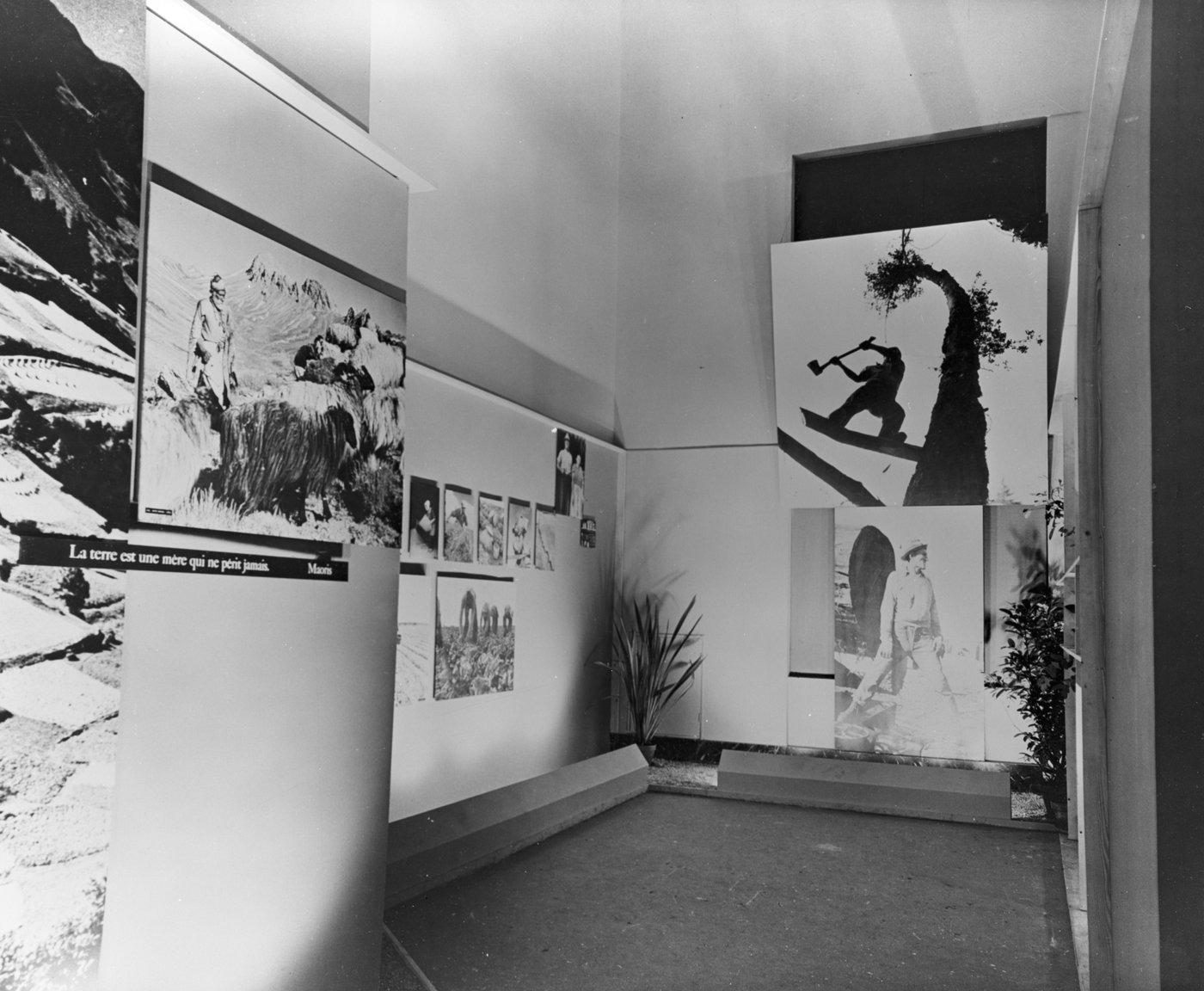
This historical milestone demonstrates that an exhibition does not merely present photographs; it constructs an overarching proposition through their spatial arrangement. A photograph possesses its own specific historical context. Yet when mobilized within an expansive universalist human narrative, novel adjacencies and ideological tensions inevitably arise.
The critical question we direct toward such historical projects is how individual differences were preserved within the collective narrative. Asserting that all human beings across disparate geopolitical realities experience life identically is fundamentally different from observing formal visual affinities between prints. Clarifying the tier at which connections are established is essential. This constitutes not a hasty condemnation, but a critical reading directed at curatorial framing.
In approaching historical exhibitions from our contemporary vantage point, we must respect methodological limits. Installation photographs, checklists, and catalogues provide material evidence of spatial arrangement. Yet they cannot recreate the lived phenomenological encounter of walking through the original space. We can analyze what the documentary images reveal, while remaining humble regarding the unrecorded ambient sound, physical temperature, and spectator flow of that historical hour.
What Does the Adjacency of Artworks Do?
Juxtaposing two artworks does not always aim to establish harmony. Frequently, one piece renders an absence in the other visible. At other times, divergent artistic responses to an identical historical dilemma confront each other. Scale, silence, or kinetic movement in one work recalibrates how we perceive its neighbor.
When an artwork is accompanied by an authoritative, prescriptive wall text, spectators often restrict their looking solely to the details highlighted in the prose. Conversely, an incisive text can illuminate an otherwise imperceptible conceptual relationship. Before evaluating the length of a didactic text, we must evaluate what it actually does to our engagement with the work.
Negative space is equally an instrument of curation. The physical distance separating two canvases can enforce independent contemplation or demand synthetic viewing. The semiotics of spatial distance vary across galleries; an installation layout successful within an intimate domestic room can falter when scaled up into an industrial hall.
We must never confuse an intellectual comparison with literal physical adjacency. That two artworks can be fruitfully compared in an academic essay does not prove they were ever physically exhibited side-by-side. Conceptual connections may be drawn in critical writing; claims regarding physical gallery placement must be substantiated by architectural floorplans, installation photographs, or exhibition catalogues.
Space, Text, and the Spectator’s Time
Reading an exhibition involves far more than examining objects hung upon walls. The orientation of the entrance, the clarity of circulatory corridors, the presence of resting benches, and the physical legibility of signage actively modulate the aesthetic encounter. An open-plan gallery permitting panoramic oversight produces a completely different experience than an architectural labyrinth that reveals works sequentially.
When time-based media or interactive installations are included, the temporal dimension becomes acute. Did we arrive at the beginning of a video loop, or step into the middle? Is there an queue to engage with the interface? A five-second glance and twenty minutes of absorbed observation yield completely different encounters.
Rather than classifying these temporal conditions as inherently superior or inferior, we evaluate them alongside the artwork's specific inquiry. Waiting in line may be an intentional strategy of the artist; it can equally be an unintentional logistical bottleneck. Discerning which is the case demands concrete phenomenological analysis.
The role of curatorial text expands at this threshold. It can demystify complex terminology, provide historical context, or issue an invitation to participate. However, it can also preemptively resolve the work, rendering direct viewing redundant. Upon reading a label and returning to the canvas, do we see more deeply, or do we merely confirm what the text dictated? This question is vital for assessing curatorial writing.
The Shared Research Ground of BIOMETRIC
In my forthcoming solo exhibition BIOMETRIC, my figurative paintings executed with earth pigments and digital interactive installations such as Person A converge around the problem of recording and representing the human subject. The canvas and the computational code are under no obligation to appear identical. Their dialogue is grounded in how human traits are selected for representation, and which dimensions of lived experience remain outside institutional capture.
This conceptual framework does not dictate a rigid gallery floorplan. The shared theoretical inquiry can be articulated without predetermining which wall hosts a specific canvas or how visitors must traverse the gallery. Spatial choreography must develop in dialogue with the physical architecture of the venue.
Before a painting, visual attention lingers upon tactile surface and gaze. In Person A, the transformation of facial features through audience participation introduces a distinct inquiry into the contingency of identity. These encounters do not replace each other. Staged in dialogue, they demonstrate how a singular inquiry mutates across divergent media systems.
I approach this dialogue not as a closed, triumphant conclusion, but as an active research arena where artworks can be read comparatively. Each piece must safeguard its autonomous inquiry. An overarching exhibition title must integrate individual works while celebrating their irreducible specificity. The true intellectual challenge of curatorial thought begins precisely here.
Questions to Ask in the Next Exhibition
Entering an exhibition, begin by observing the very first encounter: Does an image, an architectural void, ambient sound, or wall text greet you? How does this initial threshold color your subsequent perceptions? Does the orientation established at the entrance retain its validity at the exit?
Next, isolate the dialogue between two specific works: Why were they installed in proximity? Beyond obvious thematic resemblances, what internal contradictions exist between them? If you mentally remove one piece, how does your reading of the remaining work shift? This thought experiment does not alter the physical gallery, but it exposes the structural function of adjacency.
Evaluate wall texts and temporal duration independently: Does the commentary identify relationships corroborated by the work itself? Did you grant the piece the duration it legitimately demanded? Did an accelerated pace cause you to miss an evolving transformation?
Finally, reflect upon the central question the exhibition leaves you with. Memorizing an inventory of artwork titles is trivial compared to internalizing the conceptual relationships forged among them. Curatorial thinking demonstrates its enduring power here: artworks that continue to converse in your mind long after you have exited the gallery carry the exhibition's inquiry into the future.