In January 2024, the Viennese auction house im Kinsky made an announcement that sent tremors through the international art market: Gustav Klimt's Bildnis Fräulein Lieser, an unfinished 1917 portrait presumed lost or destroyed for nearly a century, had resurfaced intact in a private villa near Vienna. The canvas, whose only prior public record was an archival black-and-white glass negative from 1925, stood as one of the final depictions painted before Klimt’s sudden death in 1918.
On April 24, 2024, the canvas achieved a hammer price of €30 million (totaling approximately €35 million with fees), setting a record for an artwork sold at auction in Austria. Nevertheless, the figure landed at the bottom end of the auction house's €30M–€50M pre-sale estimate. Potential institutional bidders hesitated, unsettled by unresolved questions regarding the portrait's dark trajectory during the Second World War.
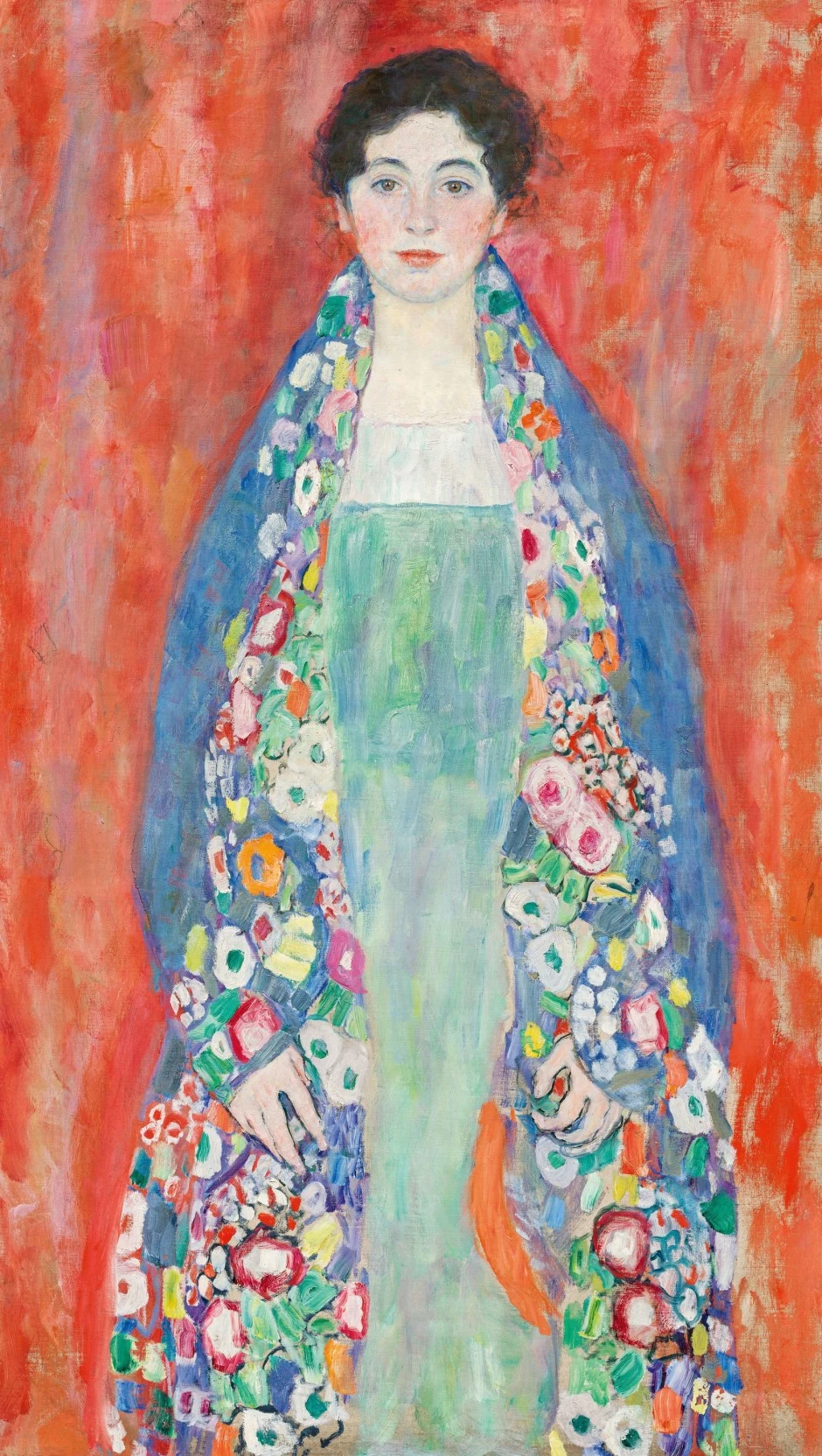
Set against an intense cadmium red background, the portrait depicts a young woman swathed in an opulent floral cape. The canvas remained in Klimt's studio unsigned upon his death. Crucially, the exact identity of the sitter remains shrouded in ambiguity. The Lieser dynasty were prominent Jewish industrial patrons of the Viennese avant-garde; archival evidence divides scholarship between Margarethe Lieser, daughter of industrialist Adolf Lieser, and the daughters of prominent patron Henriette 'Lilly' Lieser. Lilly Lieser was deported by the Nazi regime in 1942 and murdered in Auschwitz.
Uncertain provenance and the Washington Principles
The critical archival void spans the years between 1925 and the 1960s—a duration coinciding with the Nazi annexation of Austria and the systematic looting of Jewish patrimony. Whether the painting was unlawfully seized, sold under acute duress, or transferred through obscure intermediaries cannot be conclusively documented. To navigate this legal hazard, the consignors and the disparate legal heirs of the Lieser family struck an accord in accordance with the 1998 Washington Principles, agreeing to divide the auction proceeds.
While the Washington Principles urge 'just and fair solutions' for Nazi-confiscated art where legal documentation has been obliterated, critics cautioned that resolving provenance deficits through hurried pre-auction compromises establishes a fraught precedent for market expedience over historical justice.
For the history of portraiture, the episode highlights a haunting paradox: though the sitter's luminous gaze and individualized physiognomy are rendered with intense clarity—Klimt summoned her to his studio on nine separate occasions—her historical identity remains suspended in archival shadow. A century after being painted, a human face commands tens of millions while the life behind the canvas remains an unresolved enigma.