We can look at the face of a figure in a painted portrait, examining attire, posture, and facial features in meticulous detail. Yet we cannot know what words that person uttered a moment before. In a short story, conversely, we can read a character's dialogue and register the hesitation in their voice, while the physical contours of their countenance may remain entirely undescribed. Both encounters draw us close to a human being, while leaving essential dimensions open.
Painting and creative writing constitute two complementary domains in my investigation into how the human subject is represented. In contemplating the dialogue between them, one medium must never be reduced to a mere explanatory caption for the other. A written story is under no obligation to decode an unsolved visual enigma in a painting; nor is a painting tasked with illustrating characters omitted from a text.
The relationship between visual art and literature becomes articulate when we examine their respective aesthetic capacities together. Appearance, vocal cadence, temporality, and perspective exist across both domains; yet they are constructed through fundamentally distinct formal grammars. When recounting the human condition, which details are disclosed, at what chronological juncture, and through whose focalized perspective constantly shift.
The Divergence Between Seeing and Narrating
Within an image, multiple visual elements coexist simultaneously across a singular pictorial plane. The spectator's gaze wanders freely among them. In a written text, by contrast, the sequence in which we encounter words is disciplined by the syntax of the sentence. While this initial distinction is useful, it should not lead to the dogmatic assumption that every painting depicts an isolated instant, nor that every literary text narrates linear time.
A painting can evoke continuous duration through formal repetition or juxtaposed narrative vignettes. A literary text can invert chronology, reconstruct a single instant through multiple perspectives, or compress decades into a single sentence. In both media, how temporality is structured must be analyzed through the internal logic of the work itself.
Neither the reader nor the spectator is a passive receptor. In a text, we pause, turn back, and re-read an earlier passage in light of a new development. Before a canvas, we step forward to inspect an overlooked passage of impasto. The structure presented by the artwork intersects with the active choreography of human attention.
For this reason, reducing the comparison to asking whether painting or literature represents the human subject more effectively is intellectually barren. A more rigorous inquiry asks: What does this specific painting or text reveal to us, in what sequence, and from what aesthetic distance? Describing formal divergences in this manner opens the authentic potentials of both disciplines.
Who Owns the Gaze?
In literature, the worldview of the narrator should never be uncritically equated with that of the author. An unreliable narrator may be misinformed, harbor prejudices, or deliberately conceal pivotal facts. The reader navigates the friction between what is spoken and what the dramatic action implies. Narrative art frequently achieves its brilliance precisely through this unresolved gap.
In visual art, we can similarly investigate focalization. Does the painted figure confront us directly, or gaze at an interlocutor inside the pictorial space? Do their eyes engage something situated outside the frame? Does the spectator feel drawn into intimate proximity, or held at an austere remove? These questions elevate the artwork beyond an inventory of depicted objects.
Yet that a painted figure confronts us directly does not constitute conclusive evidence that the artist intended to transmit a specific emotional message. We must first describe what that gaze accomplishes compositionally across the canvas. If we intend to discuss artistic intent, studio journals or published statements provide separate corroboration.
This distinction must be preserved when evaluating painting and literature side by side. Artist, narrator, character, and spectator occupy non-interchangeable positions. Ascribing the words of a fictional character directly to the painter flattens the productive distances established by the work. Yet it is precisely these distances that carry profound questions regarding human representation.
A Narrator Speaking About a Portrait
In Robert Browning's dramatic monologue My Last Duchess, the Duke of Ferrara points to a wall portrait of his late wife while speaking to an emissary. Visual access to the painting and the narrative spun around it are under his total autocratic control. The reader never hears the Duchess speak directly; we perceive her solely through the Duke's controlling voice. Robert Browning, My Last Duchess (Poetry Foundation)
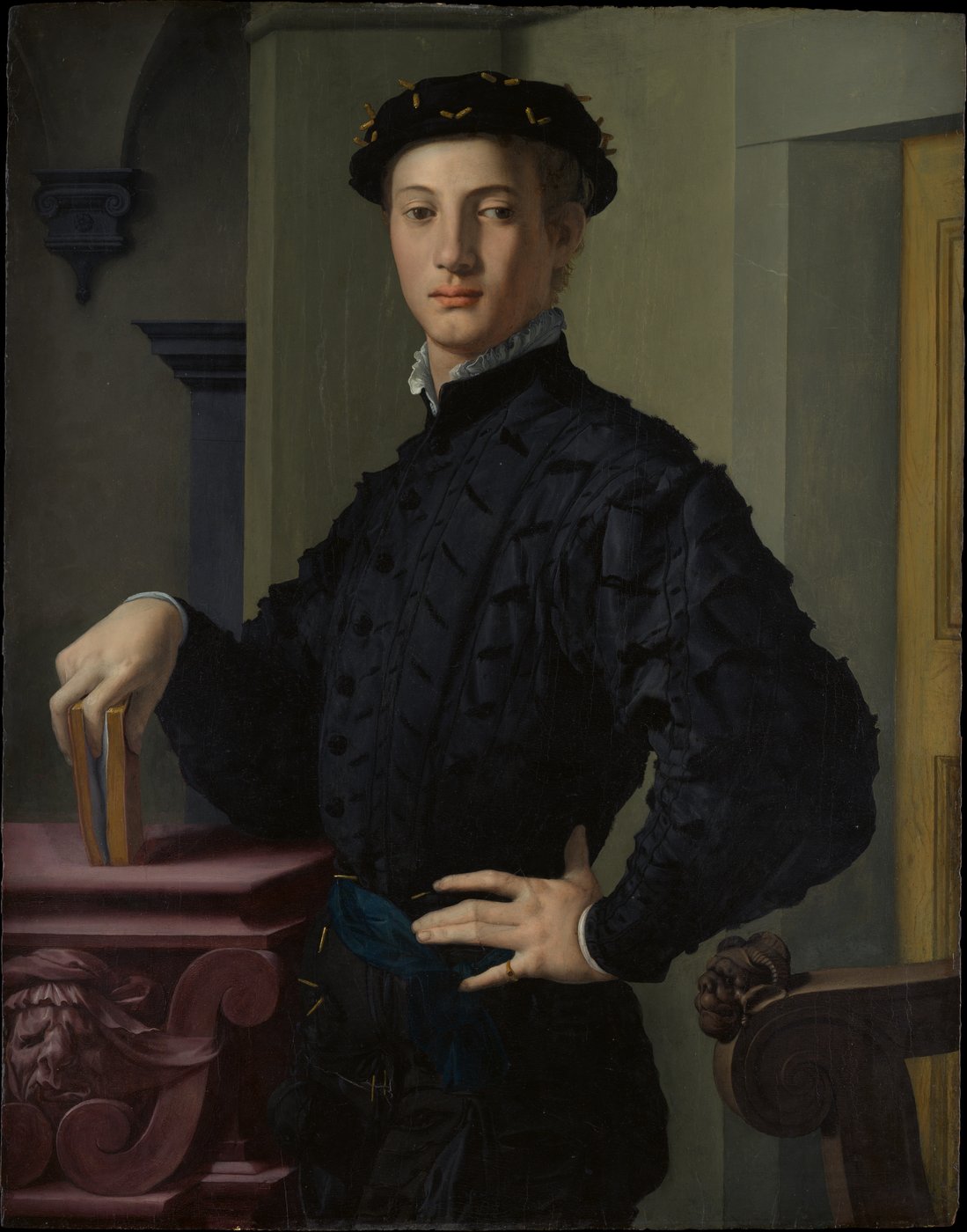
Here, spoken language does not function as an innocent label explaining the painting. The speaker inadvertently exposes his own tyranny through his words. While believing we are learning about the Duchess, we realize how entirely dependent we are upon the Duke's possessive mediation. This reading does not require treating the monologue as the poet's personal confession.
The broader inquiry emerging from this poem is relevant to all portraiture: Who speaks beside the image of a human being? What potential interpretations does that mediating voice open up or extinguish? We encounter this dilemma across museum wall labels, family scrapbooks, and documentary films alike.
Rendering a face visible does not guarantee that the subject has been granted genuine voice. Conversely, hearing an individual speak does not grant omniscient access to their life. We must interrogate which discursive channels representation opens, and who regulates them.
Temporality and the Deliberately Omitted
When a story passes over an interval of time in silence, it does not mean nothing occurred. The text has executed an ellipsis. The reader registers the omission and attempts to bridge the temporal gap, though there is rarely a single, definitive way to do so.
In painting, the negative space extending beyond the canvas edge is similarly active. A sitter's gaze pointing off-frame indicates an unseen horizon. We may never know what lies beyond the frame; yet that unknown, rather than weakening the composition, intensifies its psychological resonance.
Here, we must distinguish between careless omission and deliberate aesthetic reticence. The accidental loss of historical data is not equivalent to an artist consciously leaving a passage unresolved. The latter should not be assumed lightly; one must analyze the formal mechanics of the work in light of historical context.
For human representation, the value of omission lies in reminding us that no life can be captured by an inventory of traits. A portrait selects a face; a story selects an episode. The human subject exists far beyond these selections. The aesthetic integrity of art resides often in acknowledging this uncontainable excess without claiming totalizing omnipotence.
Can Ekphrasis Reconstitute an Image?
Ekphrasis can be defined as the vivid verbal description and critical contemplation of a visual work of art. The Poetry Foundation emphasizes how an ekphrastic poem can expand and reconstitute the meaning of a painting or sculpture. An authentic ekphrastic engagement goes far beyond inventorying medium, date, and dimensions. Poetry Foundation, Ekphrasis Glossary
In writing about an image, distinct operations take place: First, we describe observable formal elements; next, we interpret the relationships among them; finally, in fiction, we may invent an autonomous narrative inspired by the visual presence. Although these gestures inform one another, they carry distinct epistemological claims.
Description remains anchored in the physical details of the artwork. Interpretation debates what those details might signify. Fiction is under no obligation to provide archival history. However, presenting creative fiction as historical documentation creates serious critical confusion.
Returning to a painting after reading an ekphrastic text is profoundly instructive. We notice which nuances the words brought to our attention, while simultaneously recognizing elements we begin to project onto the surface under the text's influence. This return exposes the mechanisms through which language actively reframes what we see.
Two Creative Spheres, an Open-Ended Human Subject
Alongside art-historical and philosophical essays, my writing practice encompasses creative fiction. While both spheres inform my paintings, every fictional piece should not be misconstrued as a literal key to deciphering a specific canvas. The moments where different practices diverge are as vital as their intersections.
Equating the narrator of a literary piece with my personal identity, or regarding a painted face as an autobiographical confession, is legitimate only when corroborated by the work itself. That a singular individual engages in both writing and painting does not mean one practice merely illustrates the other.
Nevertheless, they converse through a shared foundational inquiry: When we record a human being, which attributes are privileged? What distance separates physical appearance from spoken voice? How closely does the remembered person correspond to the narrated subject? These questions bridge the two practices while respecting their autonomy.
Before a painted portrait, we can sense the presence of an unheard voice. Reading a story, we can imagine a face left undescribed. This reciprocal openness does not subordinate word to image; it preserves a space wherein the human subject can be approached without being exhausted. This is why we return to the artwork: despite having looked and read, something essential about human existence remains open to question.