In his 2026 publication Manifesto of Reality: Cinema After the Physical Trace, Austrian artist and filmmaker Johannes Grenzfurthner formulated an urgent regulatory and ethical proposal: "ontological disclosure." Grenzfurthner argues that visual culture must establish an uncompromising taxonomy, categorizing all moving and still images into three distinct registers made visible to the audience: physically referenced images, hybrid images, and entirely synthetic fabrications.
The theoretical genealogy of this thesis is well-established. In Charles Sanders Peirce’s foundational semiotics, the "index" is defined by direct physical contiguity with its referent: smoke is an index of fire; a footprint is an index of bodily traversal. Classical film and photographic theory rested heavily upon this indexical bond. In Camera Lucida (1980), Roland Barthes identified photography’s irreducible essence in the evidentiary force of the ça a été ("that-has-been"). Generative artificial intelligence sunders this contract completely: an image that renders the nuanced likeness of an aging human face without ever standing before an actual physical subject abolishes the ontological covenant of the lens.
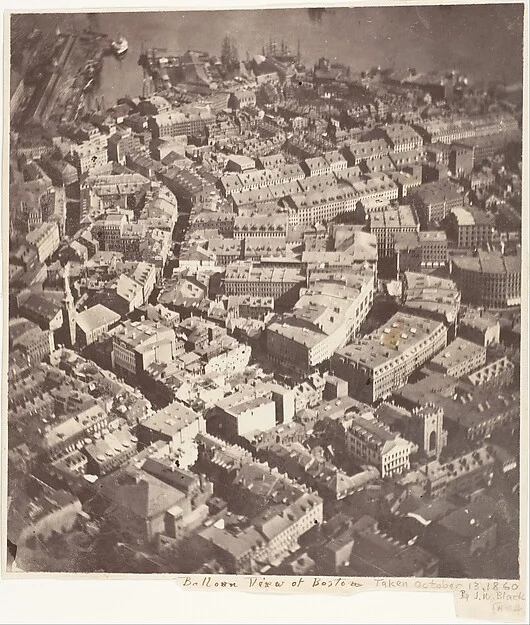
Grenzfurthner’s proposition does not seek to reverse this technological rupture. Instead, it demands that the viewer be informed which ontological contract is in effect. As documented in scholarly discussions in mid-2026, artist and educator Matt Ballou linked this framework to urgent debates surrounding pedagogical ethics, bodily embodiment, and creative agency.
Yet procedural implementation remains deeply contested. The "hybrid" category represents a fluid, porous gray zone. Does an analog photograph subjected to machine-learning denoisers qualify as hybrid? How should we classify an oil painting executed entirely by hand from a synthetic generative sketch? Such paradoxes reveal that disclosure cannot operate as a crude tripartite switch, but only as a nuanced spectrum.
For painting, the question unfolds along a divergent trajectory. Painting was never bound to the lens-based indexical covenant of the photograph; a portrait painter could always invent a face from memory or myth. Yet painting possesses an index of a different order: the brushmark, impasto texture, and physical friction of the artist's hand. Here, the indexical trace attaches not to the depicted subject, but to the authorial body executing the work. In an era saturated with synthetic imagery, the renewed prestige of painting may stem from this bodily register stepping into the vacuum left by the collapse of photographic veracity.
While supported by anecdotal market observations indicating a collector flight toward physical brushmarks, this remains a compelling critical hypothesis awaiting empirical confirmation.