American painter Jo Baer passed away on January 21, 2025, in Amsterdam at the age of 95. In 1960s New York, as a vital figure within the founding circle of Minimalism alongside Donald Judd, Sol LeWitt, and Robert Morris, Baer gained international renown through her austere, hard-edge canvases. Featuring pristine white expanses bordered strictly along their margins by precise bands of black and vibrant color, these works evacuated the pictorial center, redirecting the gaze toward the literal edge and emphasizing the painting's architectural presence.
Yet Baer's most radical historical significance emerged from what followed. Immediately after her 1975 mid-career retrospective at the Whitney Museum of American Art, she withdrew from the New York art world, relocating first to rural Ireland, later to England, and eventually settling in Amsterdam. In a watershed 1983 essay published in Art in America titled 'I Am No Longer an Abstract Artist,' Baer declared that formalist abstraction had reached an exhausted, self-referential impasse, announcing her return to figurative painting.
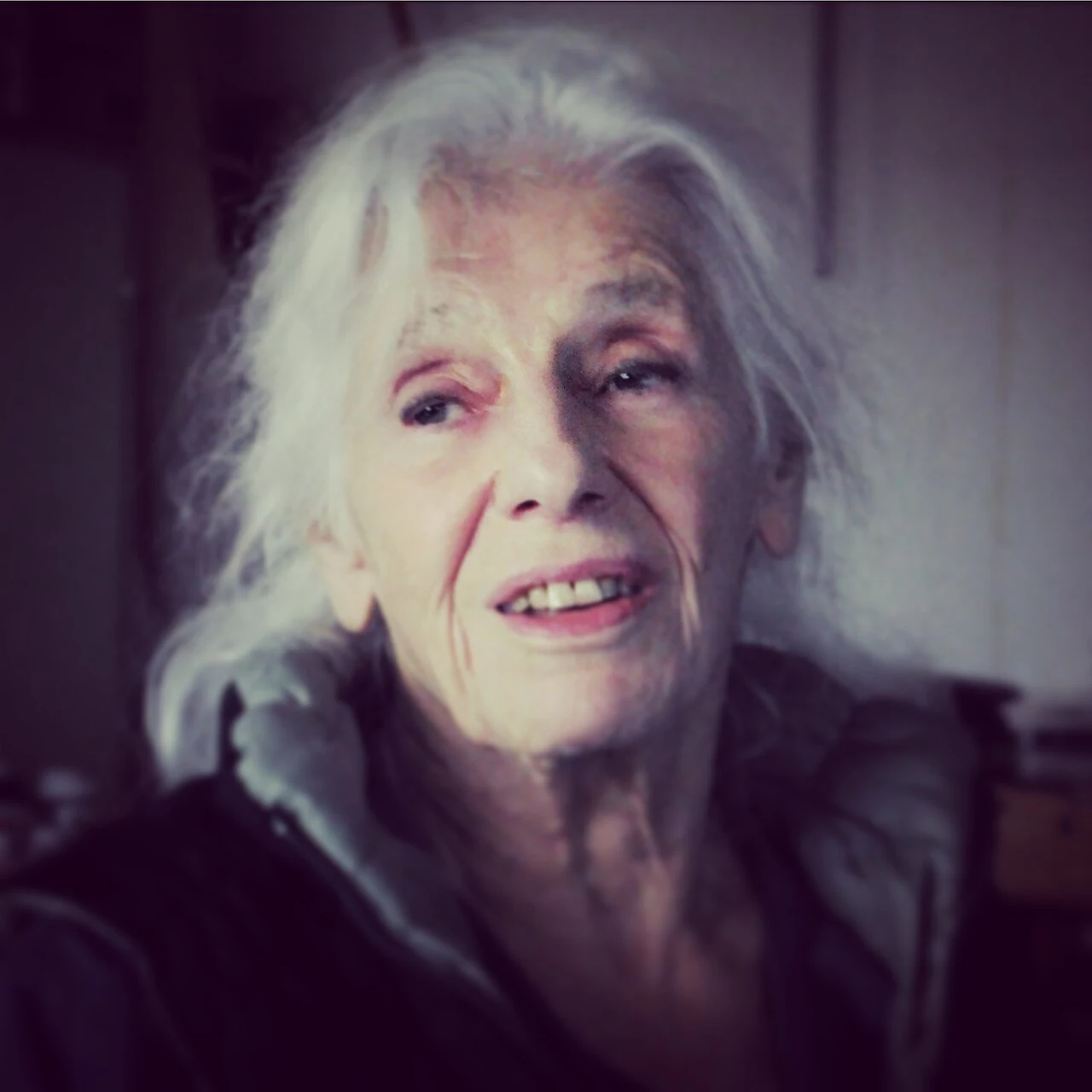
The timing of this apostasy is striking. The early 1980s witnessed the ascendancy of German Neo-Expressionism, the Italian Transavanguardia, and American figures like Julian Schnabel and David Salle who reintroduced the body into painting. Yet Baer belonged to none of these movements; her figuration was devoid of machismo or violent brushwork. Her late canvases juxtaposed prehistoric glyphs, geological strata, animal remains, anatomical fragments, and textual fragments scattered across luminous, open grounds—a methodology she termed 'Radical Figuration.'
For decades, this reversal was widely treated by the American critical establishment as professional suicide. While her Minimalist masterworks were canonized in museum collections, her figurative oeuvre was met with institutional neglect. It was only during the 2010s that European exhibitions began to reconsider this division. Even today, a comprehensive scholarly monograph capable of synthesizing both halves of her career remains overdue.
Baer's trajectory exposes the ideological limits of modernism's teleological narrative, which decreed that painting progressed irreversibly from depiction toward pure abstraction, viewing any return to the figure as reactionary regression. Baer reversed this vector through rigorous intellectual conviction. In our present moment, where figurative painting has once again reclaimed critical primacy, Baer's 1983 breakthrough stands as an extraordinary act of prescience: proving that painting thrives not by obeying avant-garde dogmas, but by confronting the unresolved mysteries of human form and memory.