One of the most singular and formidable voices of modern Turkish figuration, painter Mehmet Güleryüz died on the morning of September 3, 2024, at his studio in Paris at the age of 86. His final career retrospective staged during his lifetime, Mehmet Güleryüz 2013–2023, had been mounted in Istanbul the previous year under the artistic direction of his son Kerimcan Güleryüz.
Born in Istanbul in 1938 and educated at the Lycée Saint Benoît, Güleryüz entered the State Academy of Fine Arts (now Mimar Sinan Fine Arts University) in 1958, graduating with highest honors in 1966. Concurrently, he immersed himself in the avant-garde theater scene. The year 1963 was a dual baptism: he debuted professionally as an actor in Asaf Çiğiltepe’s storied Arena Theater while simultaneously presenting his initial solo drawing exhibition. Between 1970 and 1975, a state scholarship brought him to Paris for intensive printmaking and painting research, a city to which he returned to establish permanent residence in 2013.
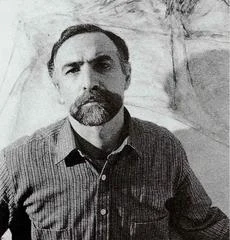
From theater to canvas: expressionist figure
This formative theatrical immersion provides the vital key to Güleryüz’s painterly morphology. His painted figures move with the exaggerated, tense choreography of stage performers. Limbs twist, jaws wrench, contours slash across the ground with lacerating speed, and acid tones clash violently. These qualities positioned him as Turkey's preeminent exponent of critical Neo-Expressionism: transforming the human figure from a passive pictorial likeness into a volatile theater of existential tension.
Güleryüz’s canvases bristle with unsparing socio-political satire, yet his critique operates through grotesque absurdity rather than didactic preaching. Autocrats, military despots, and bourgeois elites appear ridiculous and hollowed out, while ordinary human subjects project an uneasy, defensive vigilance. An outspoken public intellectual who vigorously defended artistic independence, his uncompromising stance deeply shaped his critical reception.
His historical significance is tied to the evolution of post-war Turkish art. Following the dominant abstract wave of the 1950s, Güleryüz belonged to the daring cohort that returned the figure to the center of the canvas—a movement running parallel to the rise of European Nouvelle Figuration. His Paris years allowed him to engage this discourse directly on European soil.
Scholarly literature on his work remains surprisingly incomplete. A comprehensive catalogue raisonné and critical monograph remain the urgent prerequisites for securing the rigorous art historical evaluation his monumental legacy commands.