Art is a consensusless communication.
In everyday life and the realm of science, language aims to find common ground, stabilize meaning, and persuade the interlocutor toward acceptance. An artwork, however, seeks no consensus; it neither attempts to convince anyone nor confines itself to a single, fixed meaning. On the contrary, precisely where language reaches its limit and falters—at the threshold where silence begins—it opens a new door.
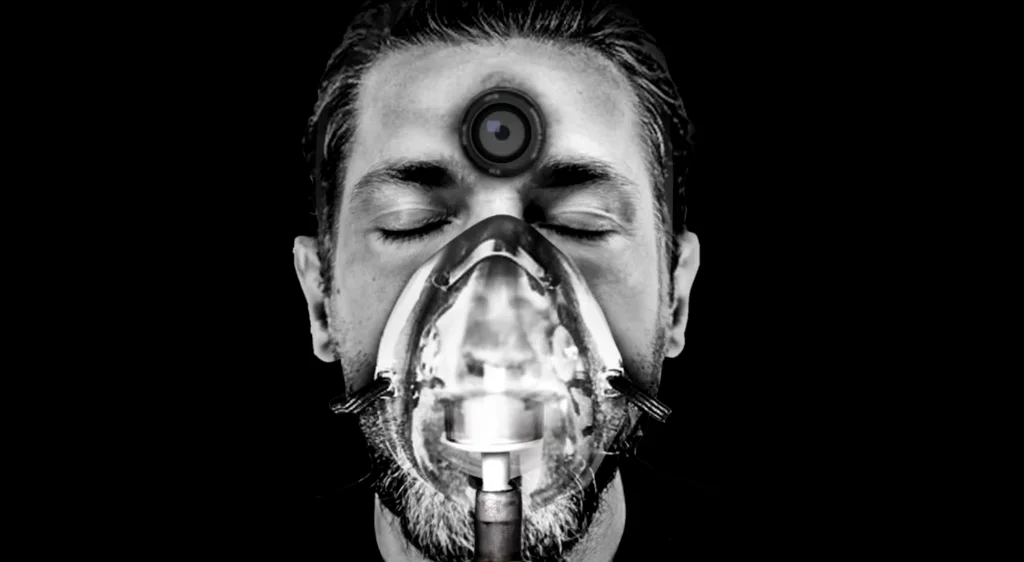
Felt Knowledge
In his famous proposition, Ludwig Wittgenstein demarcates the boundary of logical language: "Whereof one cannot speak, thereof one must be silent." Yet this boundary is not an end; it is where that which cannot be spoken begins. As language dissects and labels truth into discrete concepts, it often sacrifices its multifaceted depth.
Yet human experience cannot be codified solely through words. In philosophy, there is a vast domain that Michael Polanyi termed tacit knowledge, and phenomenology described as pre-reflective comprehension: a profound layer of what we know yet cannot put into words, grasped directly through our bodily and intuitive existence. This phenomenon, which I prefer to term felt knowledge, is an unmediated grasp that resonates within the body upon encountering the artwork, without the need for linguistic agreement. Into that realm of silence where words are exhausted, the artist penetrates through form, texture, color, and void.
Tangent Contact
How, then, does art establish a connection with truth? Not by consuming it, nor by completely encompassing it; but through tangent contact, one of the simplest principles of geometry.
When a line is tangent to a curve, it touches it at only a single coordinate. It does not penetrate the curve to occupy it, nor does it constrain its domain; yet it affirms its existence and extends toward infinity. Such is the relationship between the artwork and the viewer. The work presents the viewer neither with a prescribed formula nor a dogmatic manifesto; with its singular existence, it passes tangent to the viewer’s inner truth. At the moment of contact, a spark is born: neither does the viewer dissolve within the work, nor is the work reduced to the viewer's intellect. While both retain their autonomy, an unrepeatable encounter unfolds between them.
Art, therefore, is not a quest for consensus. It is an open-ended contact that imposes no answers—a silent threshold inviting the viewer not toward a final conclusion, but toward a journey into the infinite expanse of truth.