We stand at a cultural juncture where generative artificial intelligence can fabricate anatomically flawless figures, immaculate portraits, and spotless surfaces in mere seconds. With a single text prompt, synthetic images synthesize the nuances of historical styles without harboring a single hesitation across millions of pixels. Yet, this frictionless digital perfection has precipitated an acute visual exhaustion and aesthetic numbness. At precisely this threshold, a decisive counter-movement is taking hold across both international contemporary art circles and contemporary artists in Turkey: a resolute refusal of the sterile screen in favor of the canvas, the physical friction of matter, and the unpredictable traces of the human hand.
Increasingly articulated across contemporary art criticism and museum discourse, this impulse is termed the search for "visible humanity." In direct opposition to the sanitized domain of algorithmic generation and digital filters, contemporary figurative painting reclaims the tremor of the hand, the visceral density of pigment, the coarse weave of linen, and the vulnerability of the human body as vital sites of resistance. An algorithm may effortlessly simulate the contours of a human likeness, but it cannot embody the existential anxiety felt before a face, the abrasive passage of time, or the painter's physical, temporal struggle against the surface.
The Resistance of Paint Against the Frictionless Image
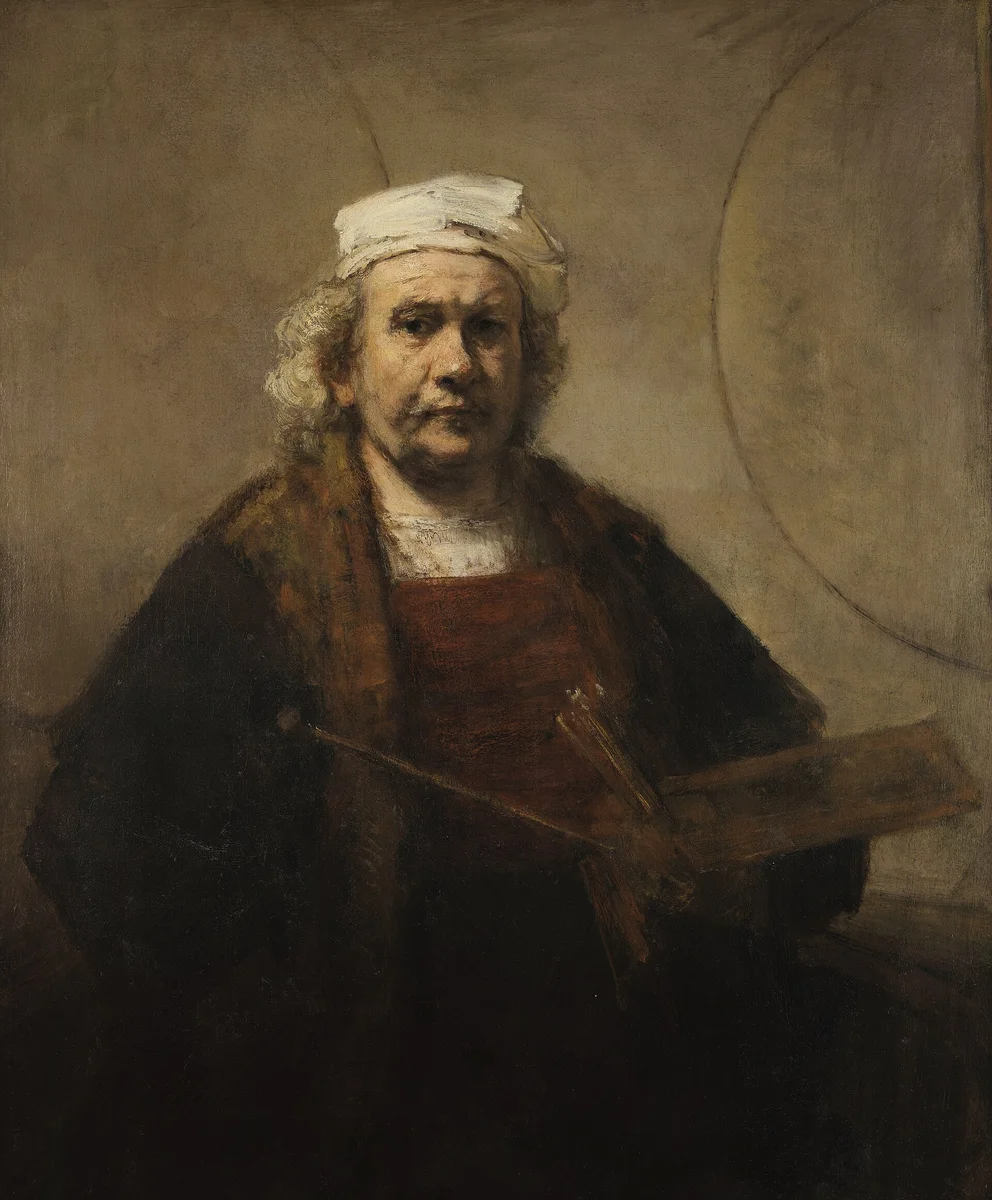
The lineage between historical mastery and contemporary practice is anchored in this visceral, material encounter. One of the most arresting testaments in art history remains Rembrandt van Rijn’s late self-portraits. In his c. 1665 Self-Portrait with Two Circles at Kenwood House, the aging master confronts the viewer with palette, brushes, and maulstick in hand. The rugged, sculptural impasto across his brow and cheeks does not strive for optical illusion; rather, it manifests flesh, mortality, sorrow, and illumination as tactile, physical matter.
Behind him, the two enigmatic, freehand circles—long interpreted by art historians as a display of the master's ability to draw pure geometric perfection without mechanical compasses—stand as a profound allegory: true resonance belongs not to mechanical instruments or automated templates, but to the sovereign, embodied gesture of the human maker. Rembrandt demonstrates that painting is never mere pictorial transcription; it is an arena that shoulders the existential weight of human existence.
Contemporary Art in Turkey and the Figurative Imperative
For a contemporary artist working within the landscape of contemporary art in Turkey today, engaging with figurative painting and portraiture pivots on an identical urgency. In an era where algorithmic surveillance and facial recognition reduce the human face to a dataset and a biometric coordinate, constructing a figure upon canvas becomes a deeply ethical and political act. Figurative art does not merely replicate an external silhouette; it creates an arena of consensusless encounter between viewer and subject, animating the unspoken memories that linger behind the visible.
Within algorithmic production, an error is an anomaly to be eradicated by the model. On the contemporary painted canvas, however, the drip of paint, the pentimento, the uneven smudge, and the painter's palpable hesitation are precisely the vessels of truth. Human experience cannot be codified through algorithmic certainty; it flourishes only where felt knowledge, tactile resistance, and embodied presence begin.
As the art world grows weary of the effortless seductions of synthetic perfection, the gaze inevitably returns to the tactile surface of the canvas. The contemporary search for visible humanity is not a nostalgic retreat; it is an urgent declaration of human vulnerability, mortal presence, and singular resistance in the age of the algorithm.