Opening on November 10, 2025, and running through April 11, 2026, the Museum of Modern Art (MoMA) in New York presented Wifredo Lam: When I Don't Sleep, I Dream, a sweeping retrospective honoring the visionary Cuban painter (1902–1982). For decades marginalized within Eurocentric modernist histories as a peripheral satellite of Parisian Cubism and Surrealism, the exhibition conclusively re-established Lam as one of the most radical figures in global modernism.
Born in Sagua la Grande to a Chinese father and an Afro-Spanish mother, Lam's biography was itself an embodiment of cross-continental diaspora. After studying academic painting in Madrid and befriending Pablo Picasso in late 1930s Paris, Lam fled the Nazi occupation of France in 1941, returning to Havana after an eighteen-year absence. What he encountered in his native Cuba was a country reduced to an exoticized American neo-colonial playground marked by brutal racial exploitation.
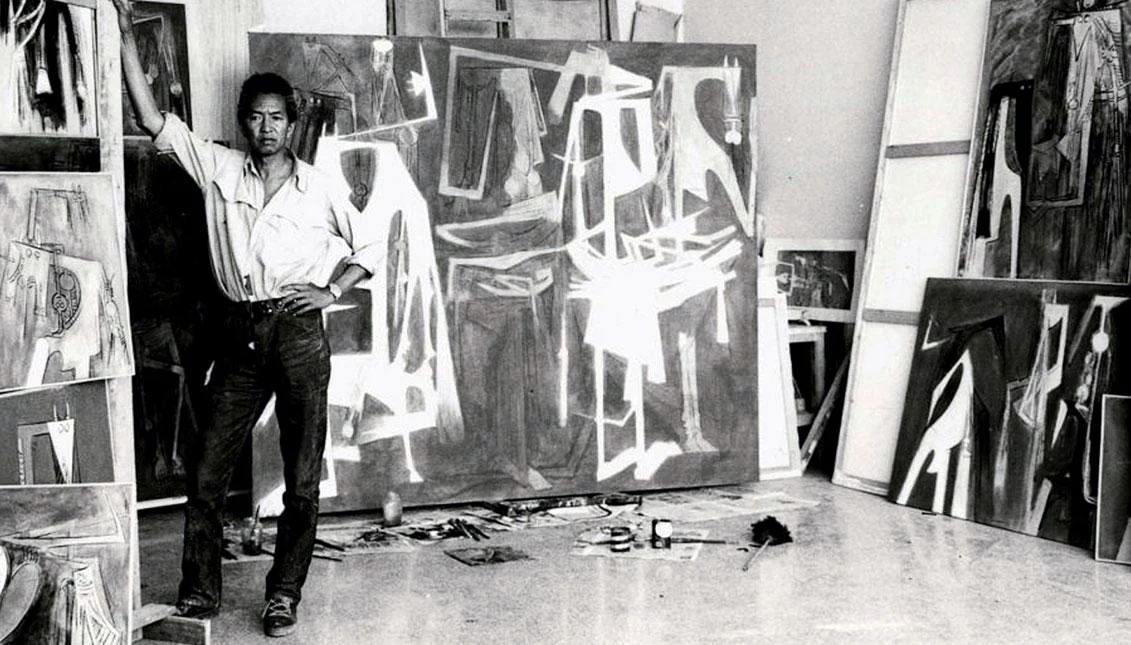
This return catalyzed a historic artistic breakthrough. In his 1943 masterpiece The Jungle (La Jungla)—acquired by MoMA shortly after its creation—Lam synthesized synthetic Cubist fragmentation with the sacred spiritual iconography of Afro-Cuban Santería. Across a suffocating wall of vertical sugarcane stalks, hybrid entities sporting equine heads, crescent-shaped facial masks, and exaggerated limbs erupt with fierce spiritual potency.
Lam completely dismantled the colonial ethnographic gaze. While European avant-gardes had appropriated African and Oceanic masks as exotic formal catalysts to revitalize Western painting, Lam reclaimed these spiritual vocabularies from within, transforming the hybrid figure into an instrument of anti-colonial resistance.
MoMA’s retrospective affirmed that Wifredo Lam’s hybrid beings anticipated the most vital concerns of twenty-first-century figurative painting. By rejecting fixed European anatomical mimesis in favor of fluid, shape-shifting spiritual metamorphosis, Lam proved that the human figure is never a static biological boundary, but a dynamic crossroads of ancestral memory and cultural liberation.