Exactly ten years ago, when I was just a little child, I wrote an essay. Back then, my concern was to soothe the anxiety of people who felt unable to keep pace with the accelerating velocity of the contemporary world—those distressed by missed promotions, unstarted fitness routines, unmet holiday plans, or the sensation that life was slipping through their fingers while raising a child. Perhaps it was a search for consolation. In that piece, I lined up one notable name after another: Columbus venturing into the Atlantic past fifty, Mimar Sinan beginning the Şehzade Mosque near sixty only to declare it his "apprenticeship piece," Vera Wang resetting her career at forty, Grandma Moses exhibiting at MoMA in her seventies, and a Prophet receiving his first revelation at forty…
The verdict I arrived at with my mindset back then was straightforward: "Do not worry, you are not late. Look at them: they started late, yet they triumphed."
Today, looking back a full decade after writing that sentence, I see clearly that the answer I offered back then no longer satisfies me. The answer was not fundamentally wrong, but it missed the deeper, underlying distress. Because all the evidence I marshaled back then to legitimize "not being late" were, in the final analysis, victories certified by the worldly order: discovered continents, soaring domes, paintings auctioned for millions, historical titles. Even in pardoning delay, I had taken refuge in the very metrics of success decreed by the world.
What Does One Truly Arrive Late To?
Today, a far more demanding question occupies my mind: What does a human being truly arrive late to?
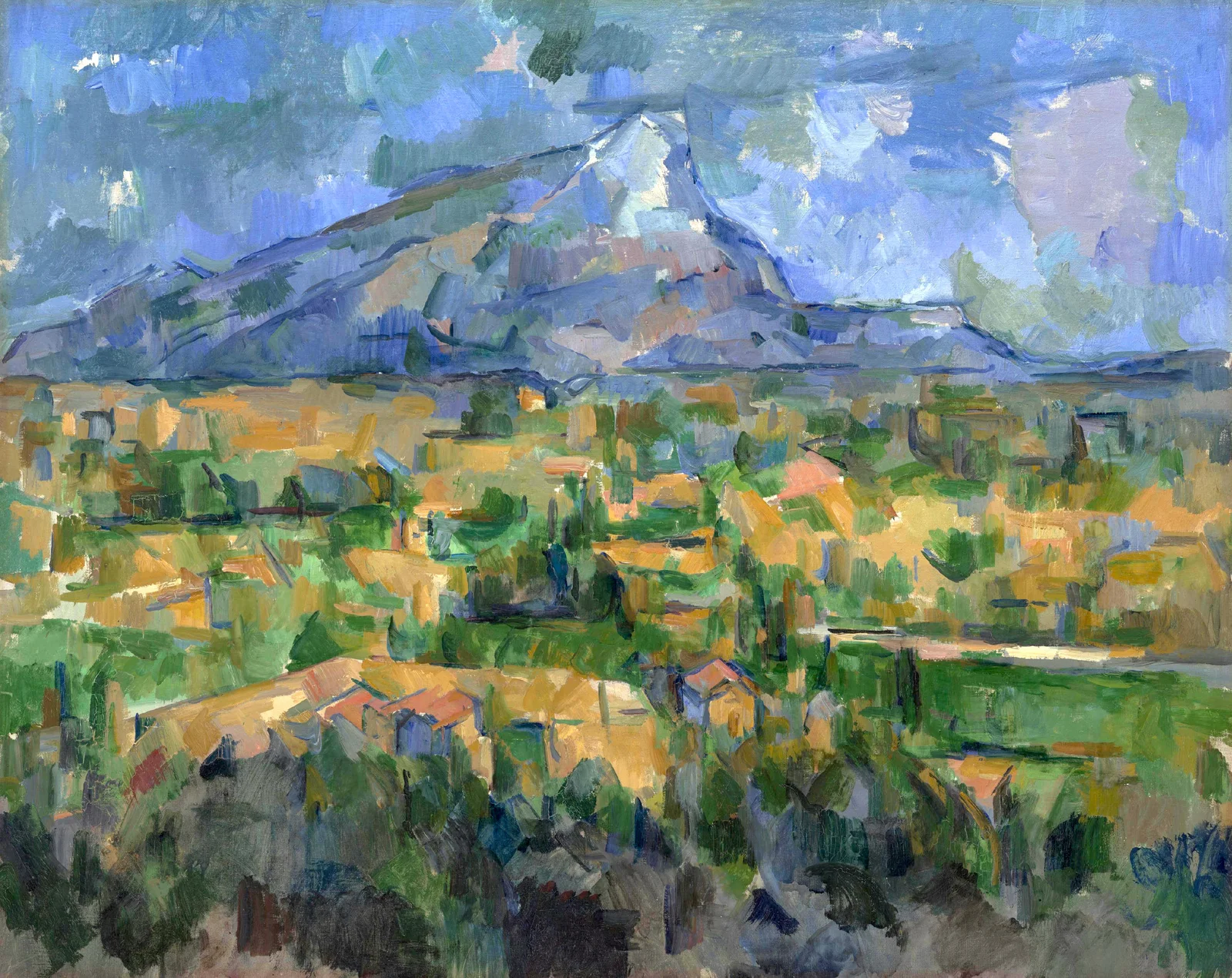
People often associate art with the overflowing exuberance of youth, and philosophy with the settled sobriety of old age. It is assumed that art requires an explosive youth fire, while philosophy belongs to a senility that has hung up its sieve. Yet the history of thought is replete with ruptures that shatter this conventional wisdom. Nietzsche was barely in his twenties when he destabilized the settled tenets of Western thought. Rimbaud completed his entire poetic odyssey by nineteen and retreated into silence. Cézanne reached the zenith of his painterly mastery in the twilight of his life, watching the exact same mountain for the thousandth time without weariness and recreating it by pushing the very boundaries of perception. Hokusai, nearing eighty while sketching his legendary waves, famously remarked, "If heaven had granted me five more years, I might have become a real painter."
Evidently, the matter is not a privilege or deficit brought by chronological age, but the temporal awareness through which an action is enacted. Let me clarify what I mean.
Two Modes of Intellect and Becoming
I believe there are two distinct and perpetually colliding modes of intellect and becoming: on the one hand, conceptual geniuses who abruptly shatter rules and leap forward; on the other, patient searchers who gather sediment, experiment, err, and mature late. The world loves the former because their narrative is dramatic, rapidly consumed, and shines brighter upon a youthful body. The latter, by contrast, is often written off as "delayed." The world forgets that the season a seed spends in underground darkness is indispensable for the flower destined to bloom. When Mimar Sinan began the Şehzade Mosque, he was in his fifties, but he had not arrived there from nothingness; for decades he had observed the topographies traversed with armies, the rivers bridged, the patience of stone, and the equilibrium of the arch. His fifty-year-old "apprenticeship" was not calendar lateness, but perhaps an ontological posture of reverence before the magnitude of the undertaking.
What Is Success: The World Knowing You, or You Knowing Yourself?
At this juncture, the primary question inevitably arises: What is success? Is success the world knowing you, or you knowing yourself?
Had Grandma Moses’s paintings never hung on the walls of MoMA, had they never changed hands in prestigious auction houses, would the existential joy she felt mixing colors in that modest rural home have diminished in the slightest? The moment you tether success to external applause, titles, or rankings, time transforms into a ruthless executioner working against you. For market time (Chronos) is a divisible, commodifiable, and expendable resource. When you miss the train there, they tell you: "It is now too late."
Yet human beings also possess an inner time (Kairos). When that moment arrives, every instant that appears stagnant from without is, in reality, a quiet fermentation. One may arrive late to titles, career ladders, houses, automobiles, or social obligations; these, after all, are artificial coordinates drawn by others.
There is only one thing a human being can truly arrive late to: awakening to one's own truth.
Time spent living out the expectations of others like a chore is merely "passing the time"—suspending existential responsibility and letting life evaporate. Beginning to see with one’s own eyes, casting off the borrowed voices of others to articulate one’s own word, is to inhabit time itself. The world recognizing you may be a coincidence or the fleeting echo of a seasonal fashion; but knowing yourself is an indelible seal struck upon the core of being.
There is no age for beginning life, for giving flesh to an idea, or for learning to truly see. For life is not a final destination arrived at, but a journey reconstituted with every single step. So long as one continues walking with one’s own stride, one can never be late to anything.
Writing these words at my young age, you might perhaps find them unconvincing. A person's interior sometimes matures much faster than their physical body. But let us keep in mind: some fruits are savored raw, others when fully ripe. In every case, both are beautiful. Even when fruit drops from the branch and mingles into the earth, it enriches the very lifespan of the world.