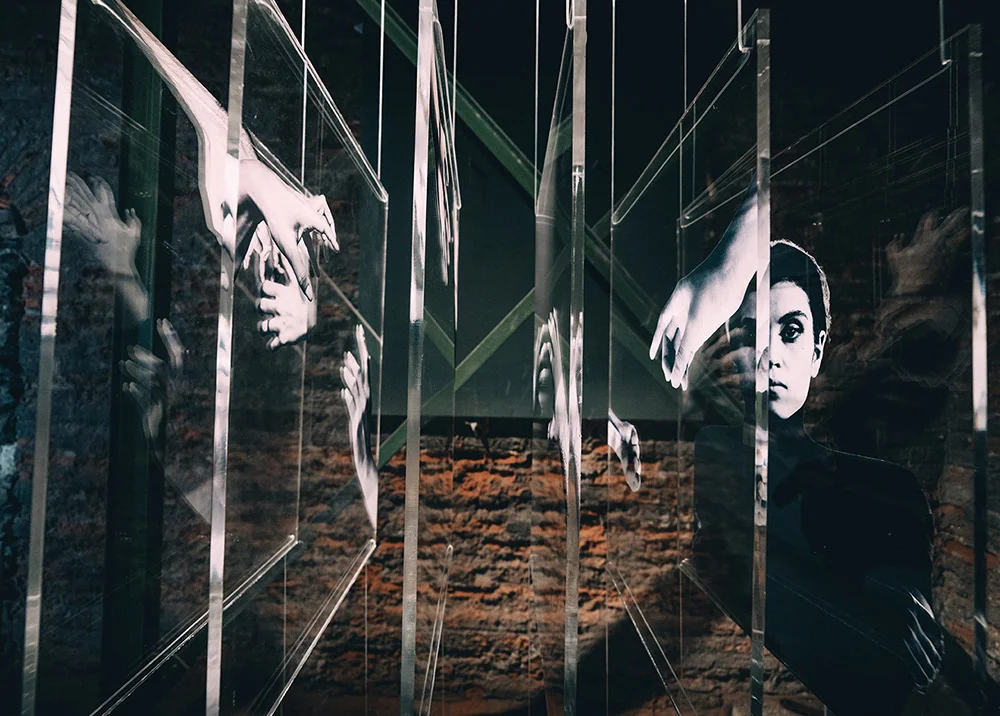
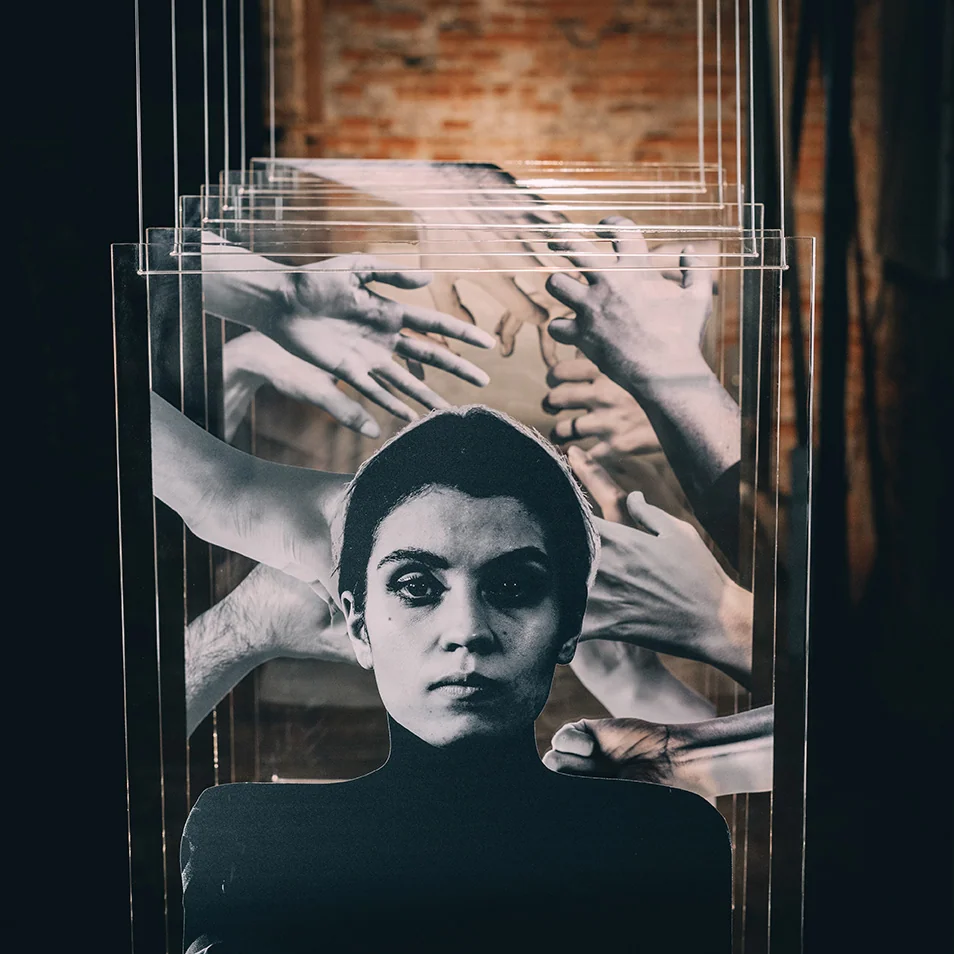
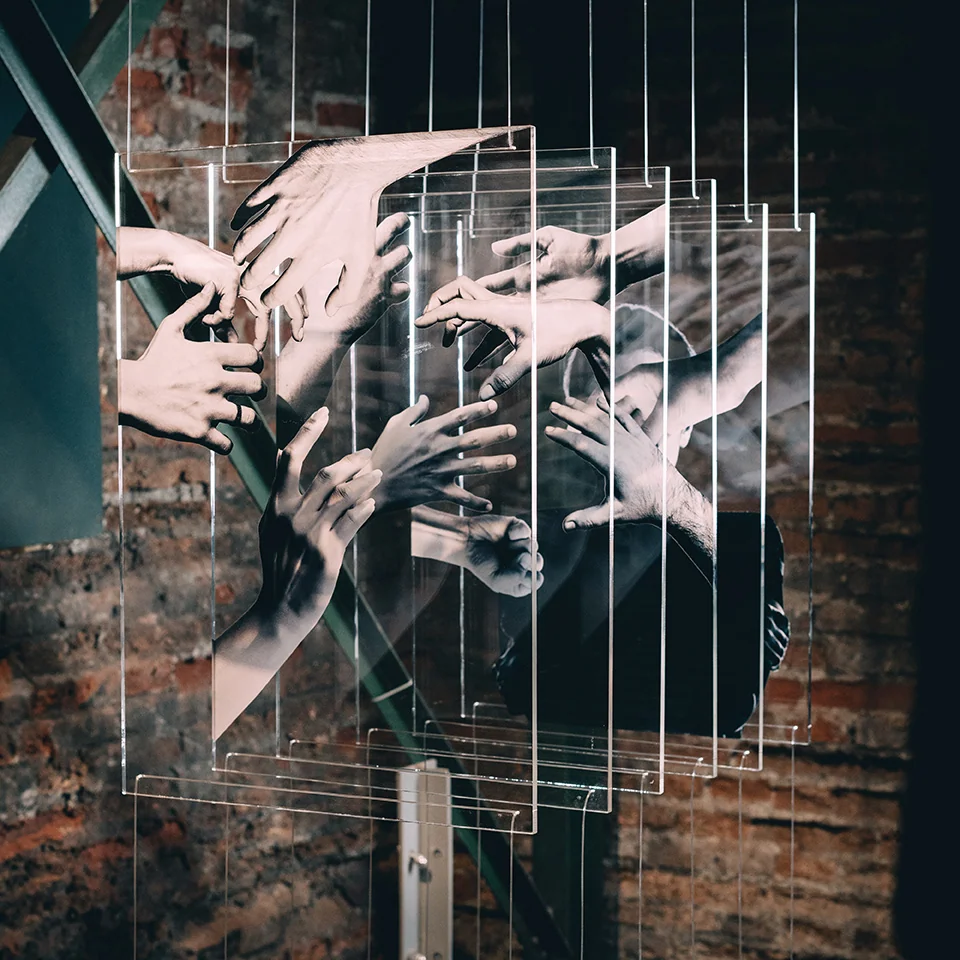
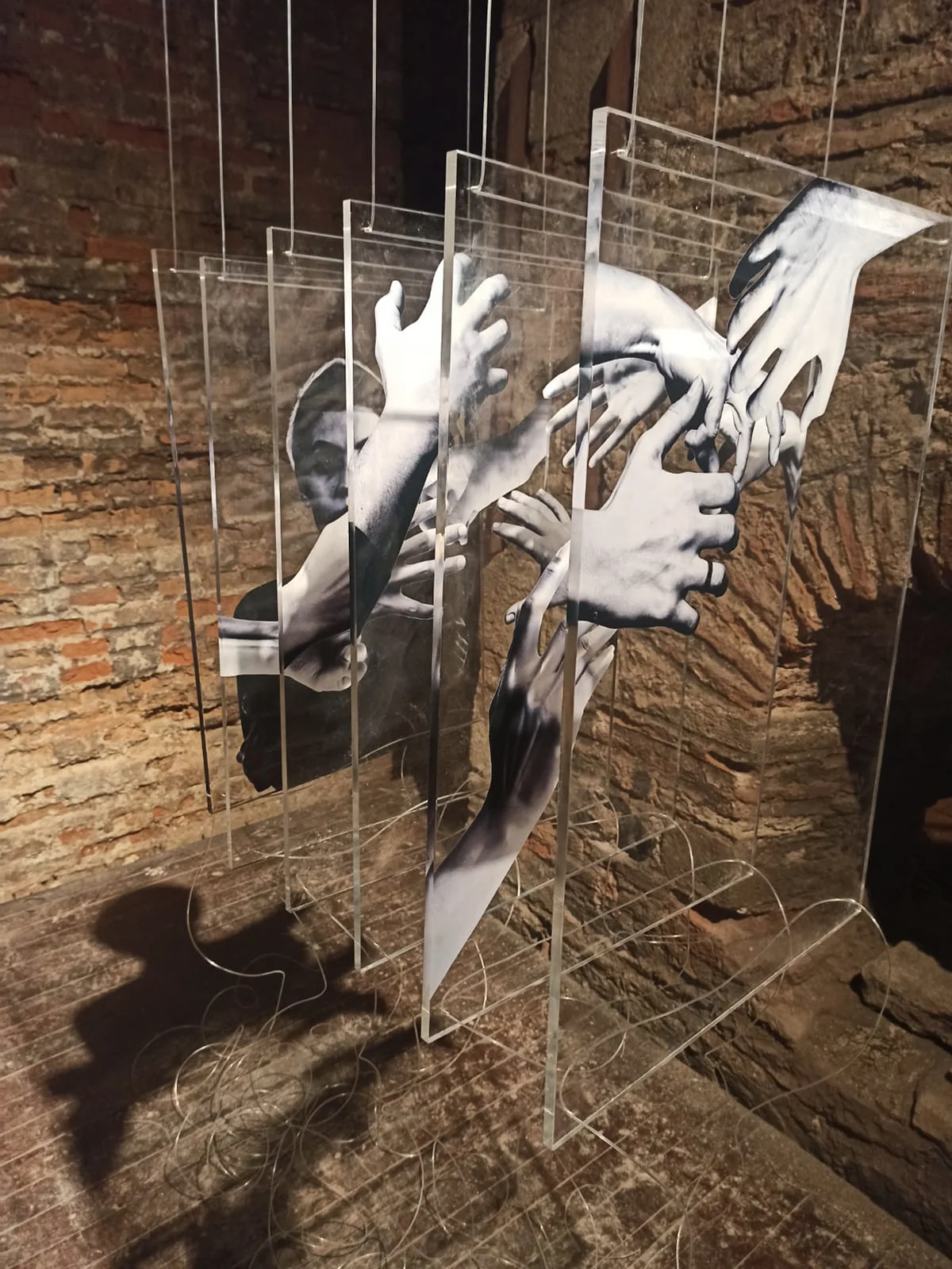
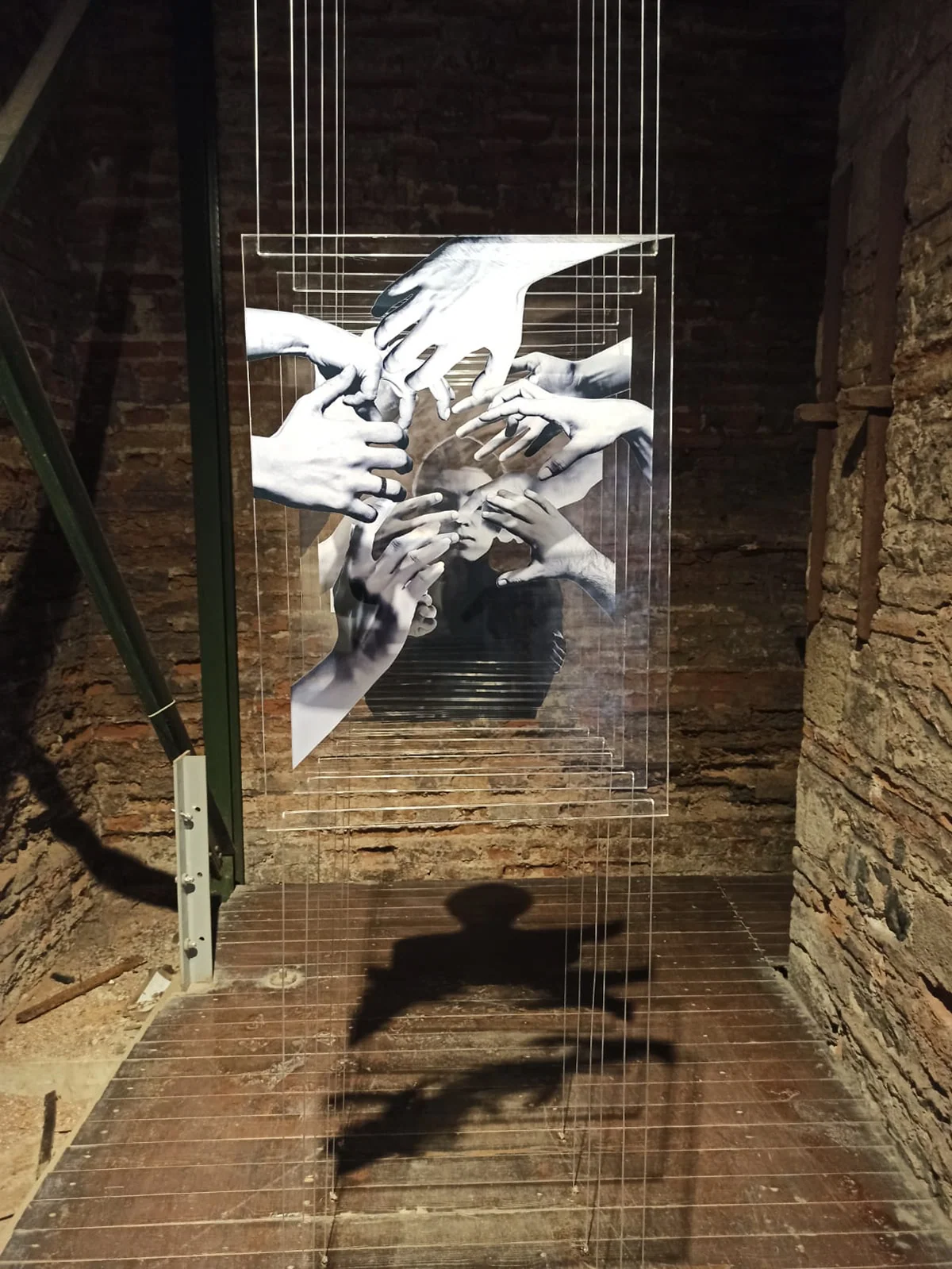
Seven plexiglass panels, 70 x 100 cm — six physical, one hypothetical. Installation. 2020.
“28 February” refers to a traumatic period in Turkey’s social memory, marked by discrimination against and exclusion of women wearing headscarves. At first, I was hesitant about taking part in an exhibition addressing this particular historical moment. The attempt to remember the past can easily turn into a didactic narrative or a political statement. Nevertheless, I chose to become part of the process. As the work developed, I realised that this encounter had unexpectedly become a space for reflection that was, for me, both cleansing and restorative.
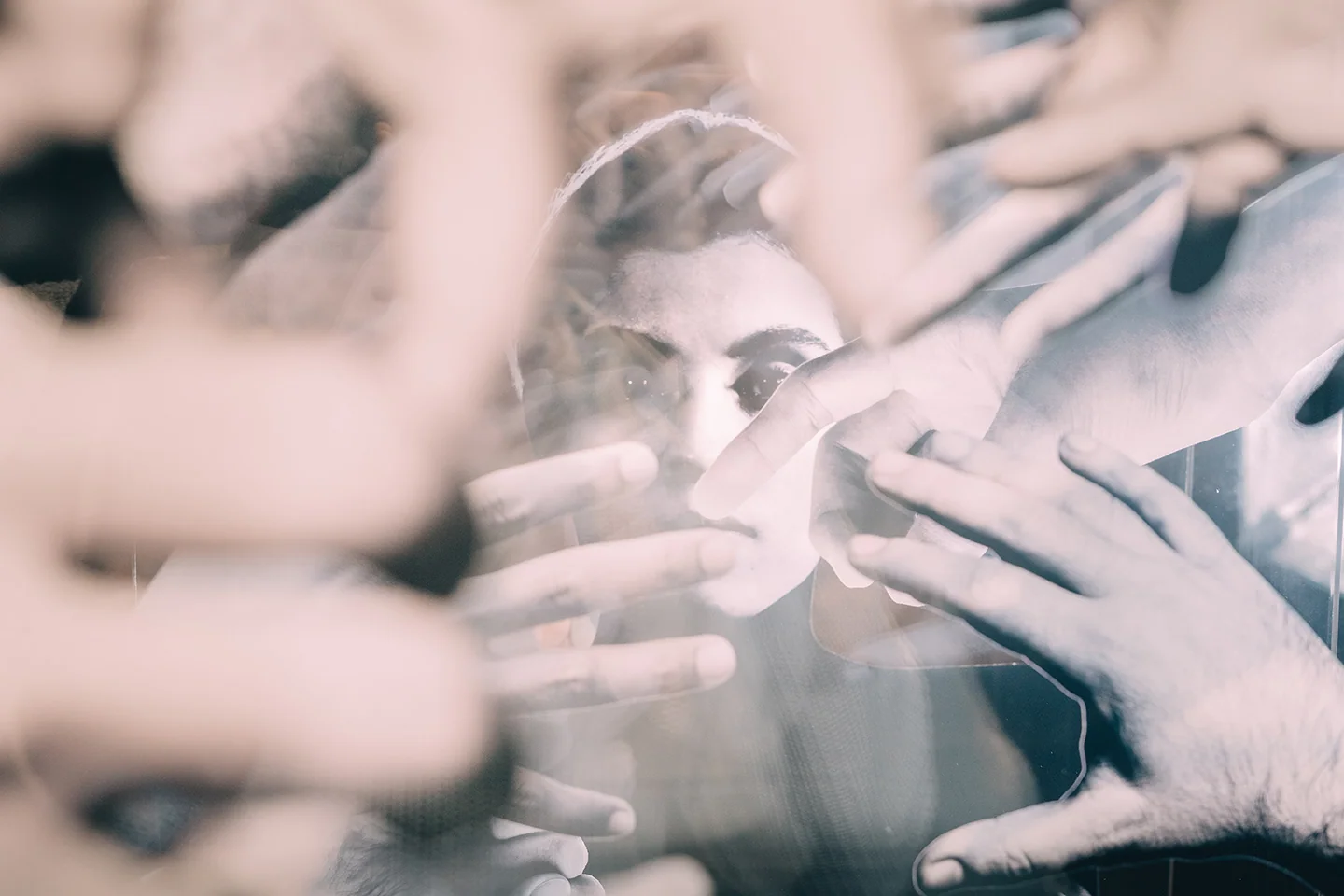
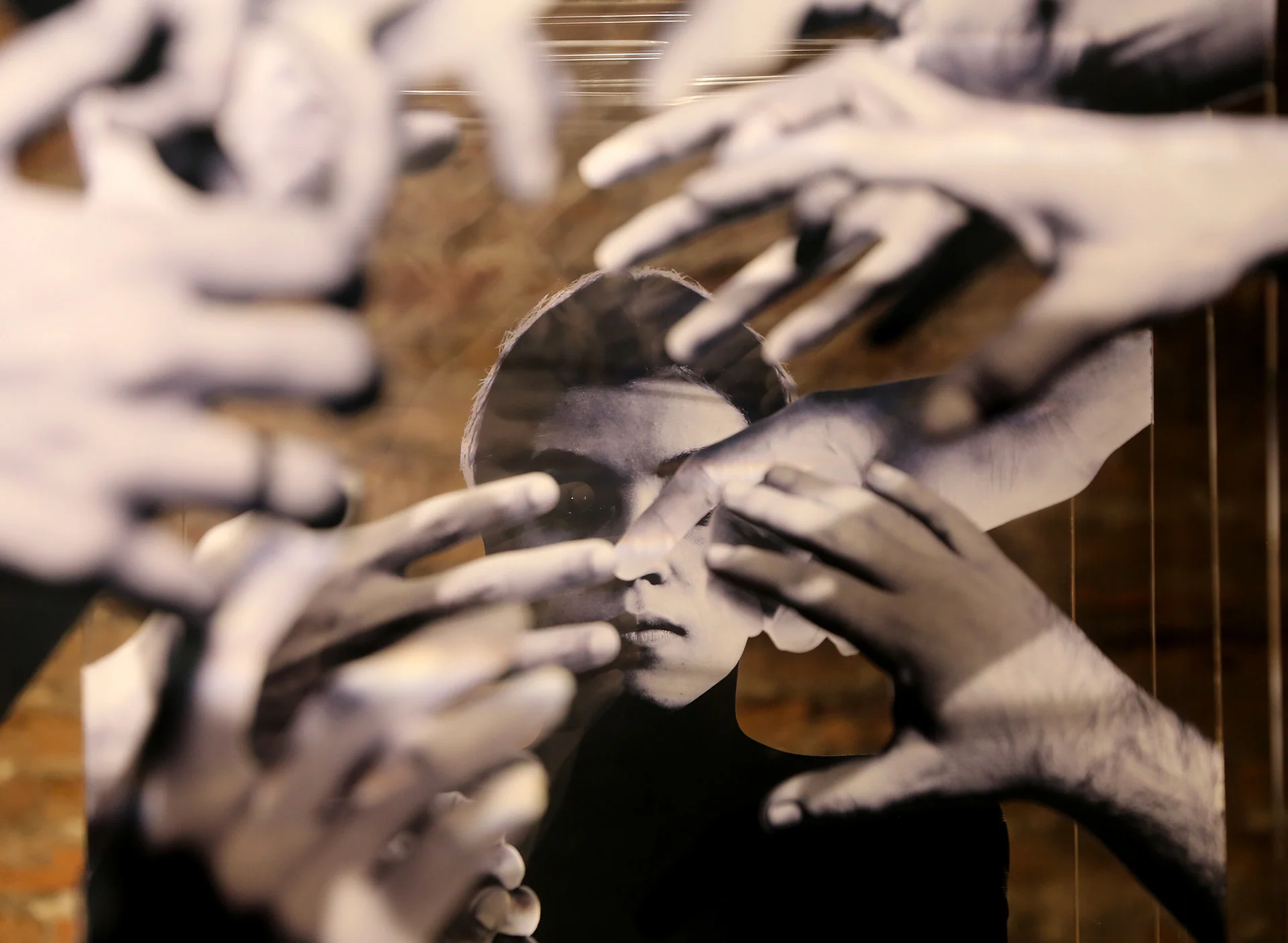
Parallel Actions consists of seven plexiglass panels arranged sequentially throughout the space. One of the panels carries a portrait of a woman looking directly at the viewer. On the other surfaces are images of female and male hands, suggesting different intentions: aggressive, commanding, protective, indifferent, or admiring. Yet the question of which of these intentions is actually present is left to the viewer. The seventh panel appears physically empty, but is in fact one of the most important elements of the work. That panel is the body of the viewer standing before it.
The installation is not designed to be understood from a single fixed viewpoint. It is meant to be experienced through movement and from different angles. When you stand behind the woman, the figure appears free and independent. She is neither the object of violence nor the recipient of a false form of sanctification. But when you move 180 degrees to the other side, the same body begins to disappear, overwhelmed by the noise of the hands that cover it.
At any point between these two positions, something else becomes visible: the spaces between the panels. These gaps represent not only physical distance, but also the distance between people. Perhaps it is precisely this distance that makes encounter, looking, and meaning possible.
I believe that truth often emerges in this negative space, in the intervals between what is visible. Much of social conflict may stem from our tendency to understand the void as absence or deficiency. But a void is not necessarily a lack. It can be the very condition that allows meaning to emerge. Much as mathematics would become something fundamentally different without the concept of zero, rather than simply a system of subtraction.
Video documentation available in Turkish upon request.